Lubinpla

Technical Sales AI for Specialty Chemicals.

Connect the site to your products with technical reasoning, and deliver a document made for each customer Get Started

Technical sales, working with an AI engineer

From the site record to the report your customer reads, agents take on the technical work and your team focuses on judgment.

Lubinpla Work Logs
Lubinpla Accounts · EdgeCool
Lubinpla Projects
Lubinpla Lubinpla Agent
Lubinpla Tasks
Lubinpla Tasks
Lubinpla Tasks
Lubinpla Field Care
Lubinpla Accounts · EdgeCool
Lubinpla Lubinpla Agent

Field data becomes a document for each customer.

Technical sales comes down to how well you connect the site to the product. Bring the site's visit notes, operating conditions and readings into Lubinpla with your product data and technical documents, and the agent connects the two through Lubinpla's technical reasoning, writing a document fitted to each customer and case. Your reps spend their time on judgment, and customers receive documents with the evidence behind them.

Agents

Technical reasoning connects
field experience to theory.

The agent runs the task each case needs and works many cases at the same time. It reads the site's data from several angles against the science and mechanisms behind it, keeps what is confirmed apart from what is inferred, and proposes the best-supported decision.

  • Many cases at once
  • Read through the mechanism
  • Tuned to your team

Dataroom

Accurate answers come from
your internal documents.

TDSs, SDSs, CoAs, certificates, customer case studies and other internal technical documents are tagged on upload, so the agent finds what it needs quickly and accurately, however large the library. For each point in an answer, it compares the files behind it from several angles and cites them, so the rep can check it right away.

  • Tagged on upload
  • Every point cited
  • Your documents only

Field Care

A dedicated agent responds to
each customer in real time, any time.

Each customer gets a dedicated agent that takes questions at any time. It does more than log them: it gives technical answers from what you have shared with that customer. And unlike email, it is a real conversation, so the customer can ask, follow up and go deeper.

  • Real-time conversation
  • Technical answers from what you share
  • Decisions go to your team

Work Logs

Scattered visit notes,
organized as structured data.

Describe the visit in plain words, and the agent files it as a work log, split into readings, observations and next steps. The readings build up in the project by date, and the log becomes part of the site's record that the agent reads before every case.

  • Sorted by field
  • Readings flow to the project
  • Read before every case

Projects

Every customer site's
history, in one place.

Each customer site is a project, with its operating conditions, the products in use and its readings. Readings build up by date instead of being overwritten, and when a work log brings new ones, the agent adds them to the project. When a problem appears, the team sees right away what changed before it.

  • Readings over time
  • Products in use
  • Always up to date

Accounts

Everything exchanged with
each customer, kept on its own.

Each customer account holds its own contacts, work logs, projects, reports and dataroom files. In Field Care, a customer sees only what was shared with their own account, so one customer's information never mixes with another's.

  • Kept per customer
  • Every document on record
  • Customers see only their own

Integrations

No customer email or
meeting request slips through.

With your email and calendar connected, the agent reads each customer email alongside that account's records and puts any meeting it asks for on the calendar. Emails to the customer are ready as drafts, with the report attached.

  • Read with the account's records
  • Meetings onto the calendar
  • Drafts with the report attached
Measured results

What changed for technical sales teams.

visit_EdgeCool_1104.txt

EdgeCool central sump, foam + smell again

worst on monday morning after the weekend

conc 7%? refractometer photo on my phone

pH 8.9 (was 9.2 last time??)

skimmer broken they said, check

Kim asked for biocide sample by fri

send quote again

TDS for the new coolant, which rev?

call Lee about the test kit

Visit notes scattered across text files and chat
Lubinpla
Written as you said it, linked to the site's record
EdgeCool_sump_log_v3_final(2).xlsx
E5fx=VLOOKUP(A5,Sheet1!A:F,5,0)
ABCDEF 1 DateConc %pHTemp °CBacteriaNote 2 2025-07-027.29.12610^4 3 2025-08-117.0?rep on leave 4 2025-09-016.88.929heard on a call 5 #N/A 6 2025-10-208.710^6?see email 7 2025-11-04731foam again 91011
Sheet1Sheet1 (2)old
Site conditions kept in memory and a few spreadsheet cells
Lubinpla
Every reading kept over time on the site's record
Marco LindqvistNorvale Machining

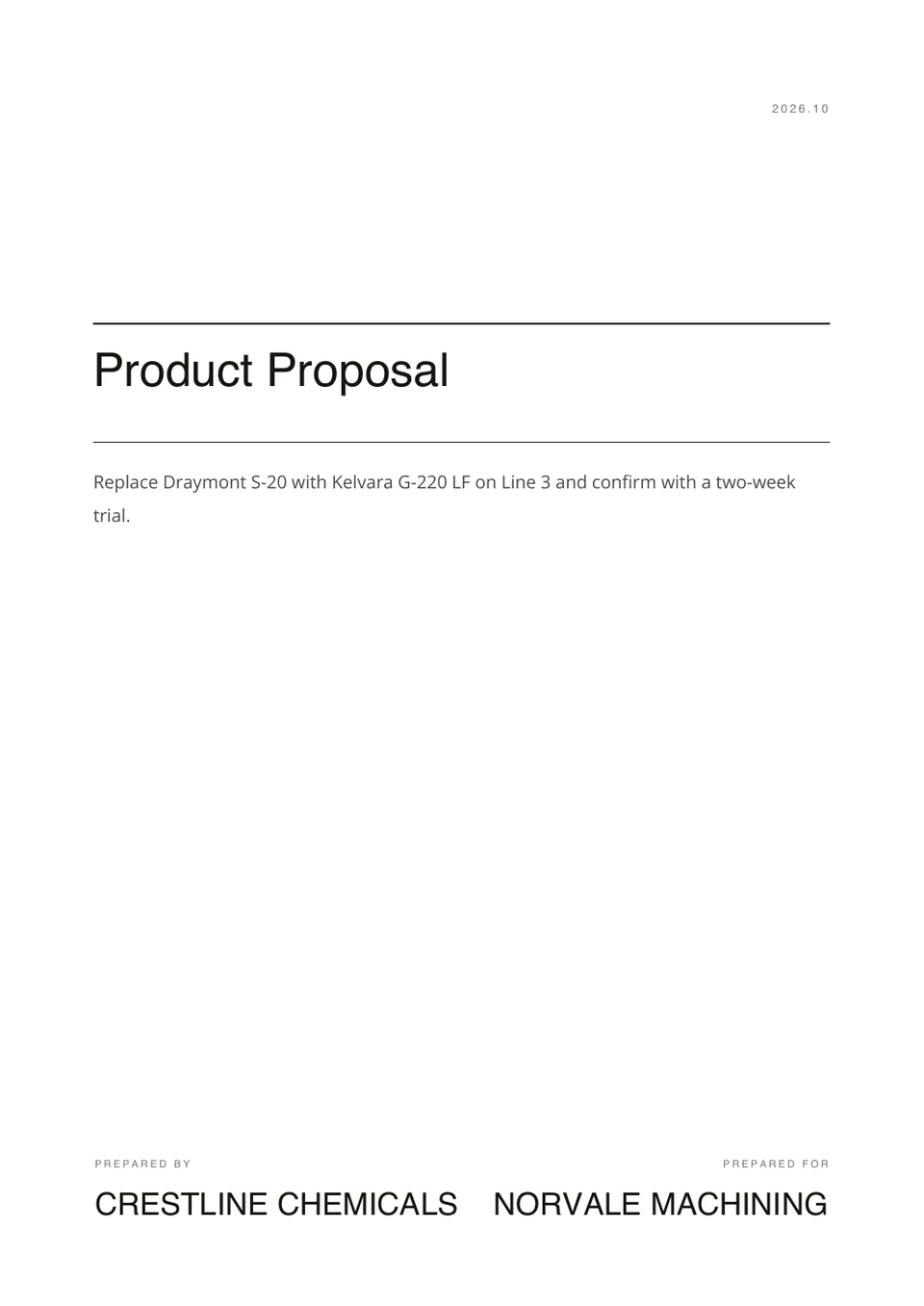
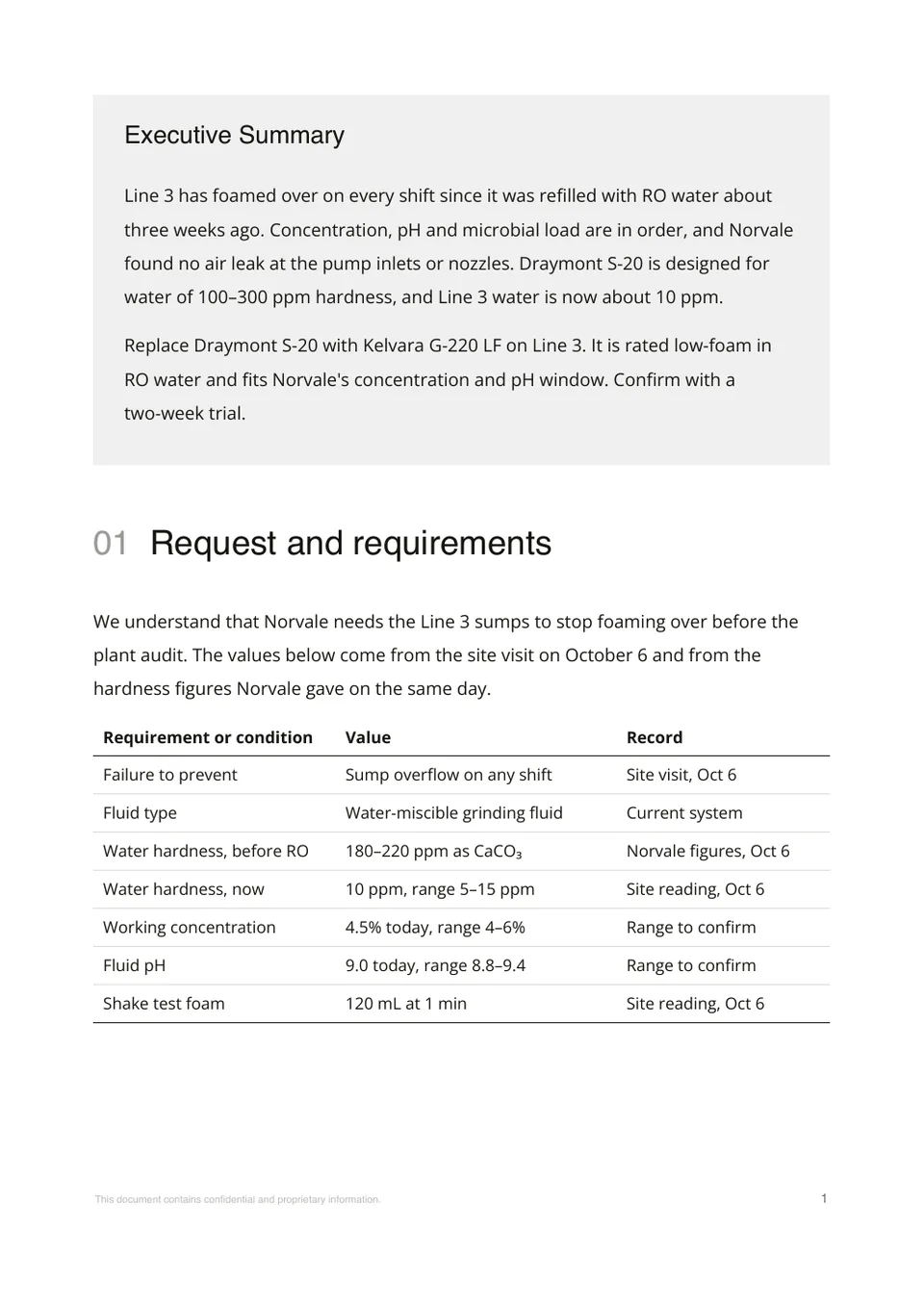
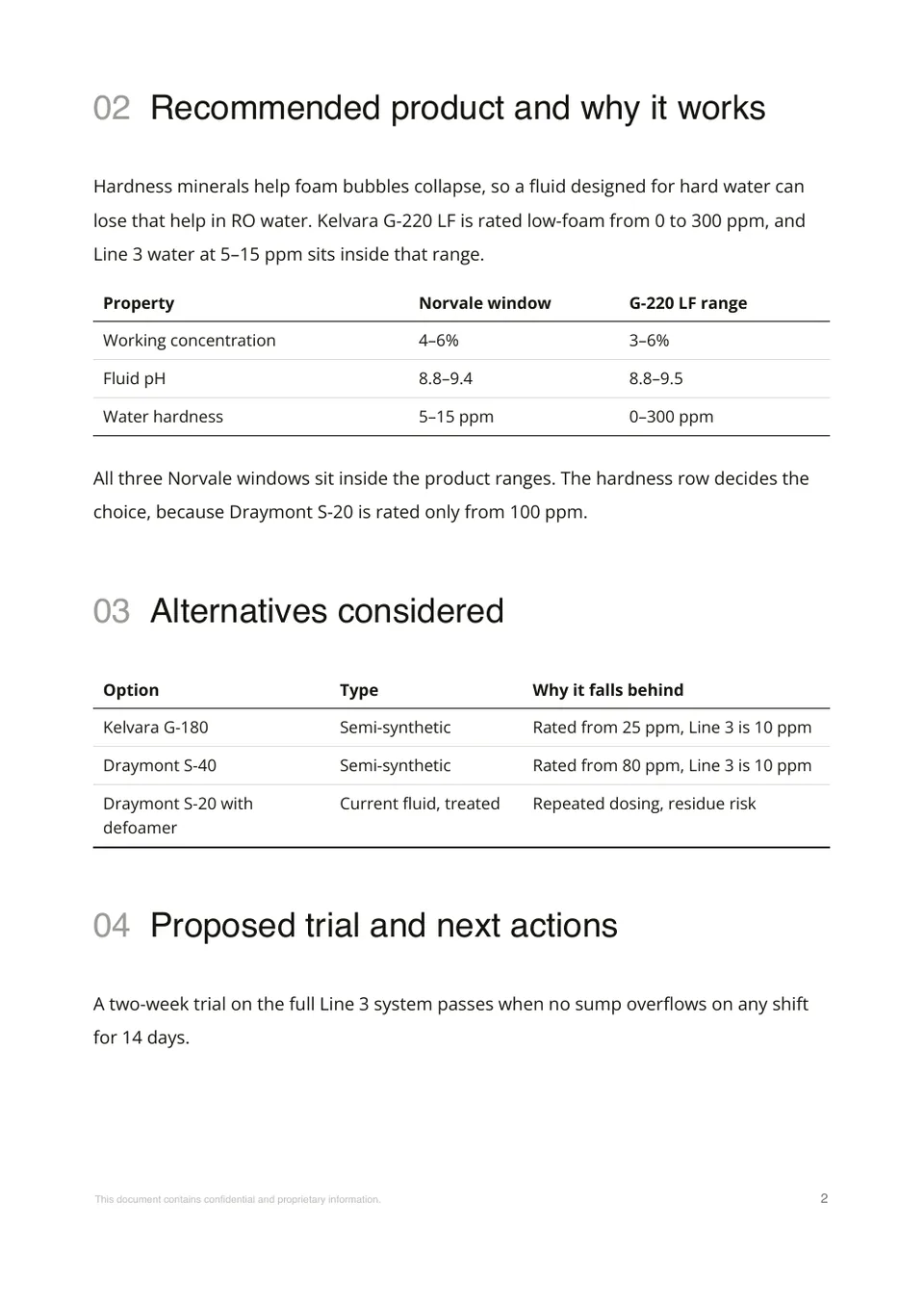
Line 3 sumps are foaming over every shift since we refilled with RO water.09:12

Can you send something that works? We need it before the plant audit.09:13

Missed voice call · 10:42

Sorry, I was on site. I'll come by this afternoon.11:05

Also send the price and the data sheet for whatever you bring.11:20

Will do.11:21

Any update? Purchasing is asking.16:40

Message
Customer requests and calls left in a messenger thread
Lubinpla
Contacts, reports, dataroom, projects and work logs in one account
Inbox
Sangmin Kim, EdgeCoolMon 08:31

Concentration for the aluminium line?

Since the aluminium line came in, what concentration should we hold? We're worried about staining.

MeWed 17:52

Re: Concentration for the aluminium line?

Please find our product catalog attached. The recommended ranges are on page 14.

Product_Catalog_2025.pdf12.4 MB

Sangmin Kim, EdgeCoolThu 09:05

Re: Re: Concentration for the aluminium line?

The catalog doesn't cover our mix of metals. Can someone call me?

Questions by email, answered days later with the catalog attached
Lubinpla
A private space where the customer's agent answers from what you shared
AI assistant

Our central cutting-fluid sump foams and smells. What could be causing it?

Foam and odour in a cutting-fluid sump usually come from several factors acting together. The most common causes are:

1. Microbial contamination. Bacteria and fungi break down the fluid's components, producing hydrogen sulphide and organic acids that smell, and by-products that stabilise foam. Anaerobic bacteria grow especially when the system stands still.

2. Concentration out of range. Too high a concentration raises the surfactant level and the tendency to foam, and too low lowers corrosion protection and biostability.

3. Water quality. Soft water foams more easily, and hard water can destabilise the emulsion.

4. Tramp oil. Hydraulic and slideway oil form a film on the surface that cuts off oxygen and feeds bacteria.

5. Mechanical causes. High pump pressure, return lines that fall onto the surface, and leaks on the suction side entrain air.

Recommended actions: measure concentration and pH regularly, add a biocide, skim off tramp oil, consider a defoamer, and replace the fluid if needed. Because the exact cause depends on site conditions, consult your fluid supplier or a specialist.

Message
A long general answer, the same for everyone, with no source
Lubinpla
Reasoned from your own records, every point cited
Problem_report_EdgeCool_draft.docx

Problem report: central sump foam and odour

1. Symptoms

Foam and odour in the central sump since mid-October, worst after weekends.

2. Likely cause (in progress)

Bacteria? Concentration? [paste data from the sump log here]

3. Action

[after checking the TDS for the 3 candidate biocides]

ManagerPlease attach the readings and the source for each point.
Finding, comparing and writing, all done by hand
Lubinpla
Delegated as a task. Your team judges and gives feedback

Lubinpla is built for one team: technical sales in specialty chemicals. Reps spend less time finding and organizing information, and customers receive documents grounded in their own site's data.

  • Grounded in verified data

    Answers start from your internal technical documents. Where those fall short, web research adds public sources such as manufacturer data and standards, and every point cites its source.

  • Set up your team's way

    Add rules to any step, or have it wait for approval when you need to. You can also build tasks around the way your organization works.

  • One document per case

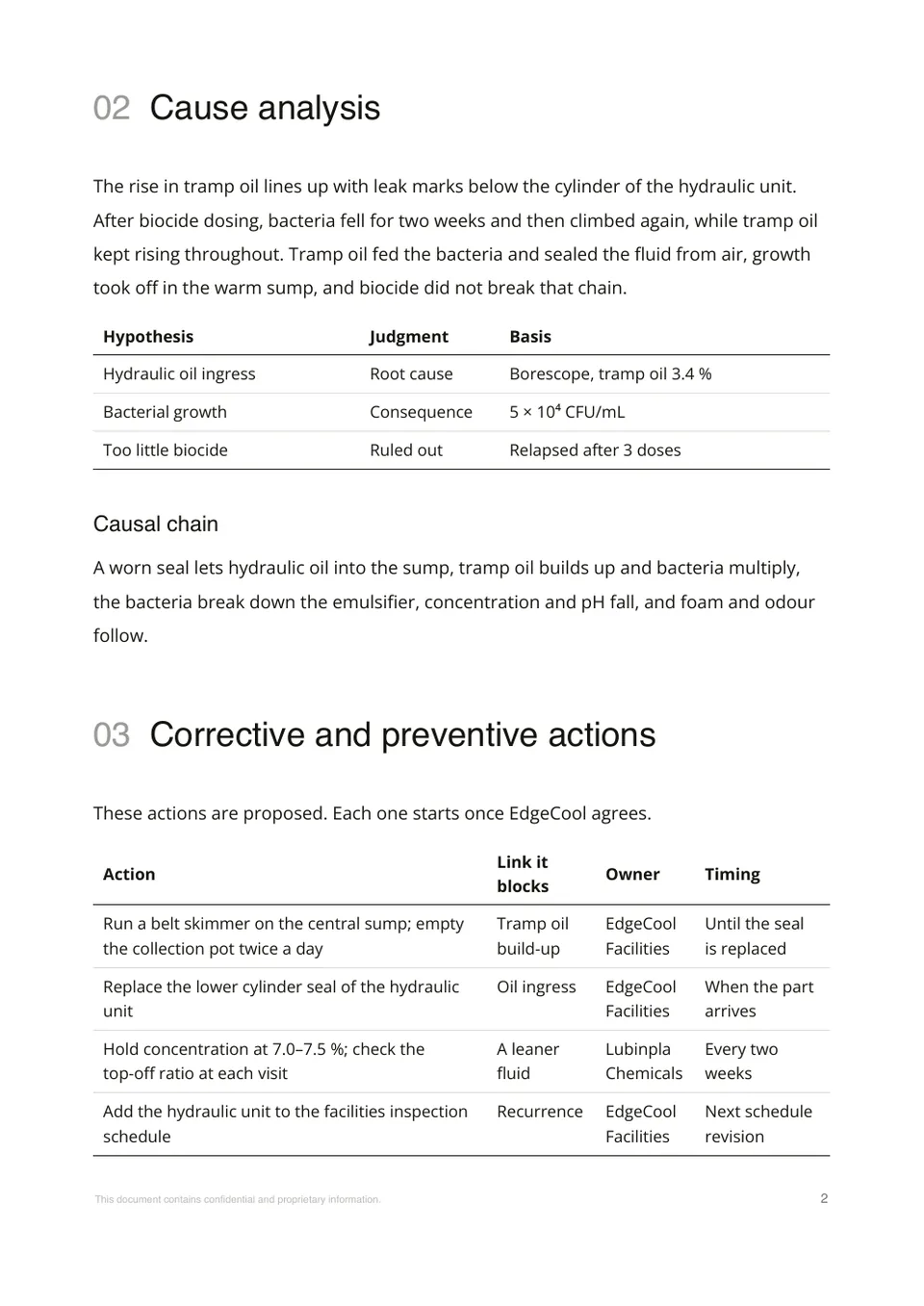
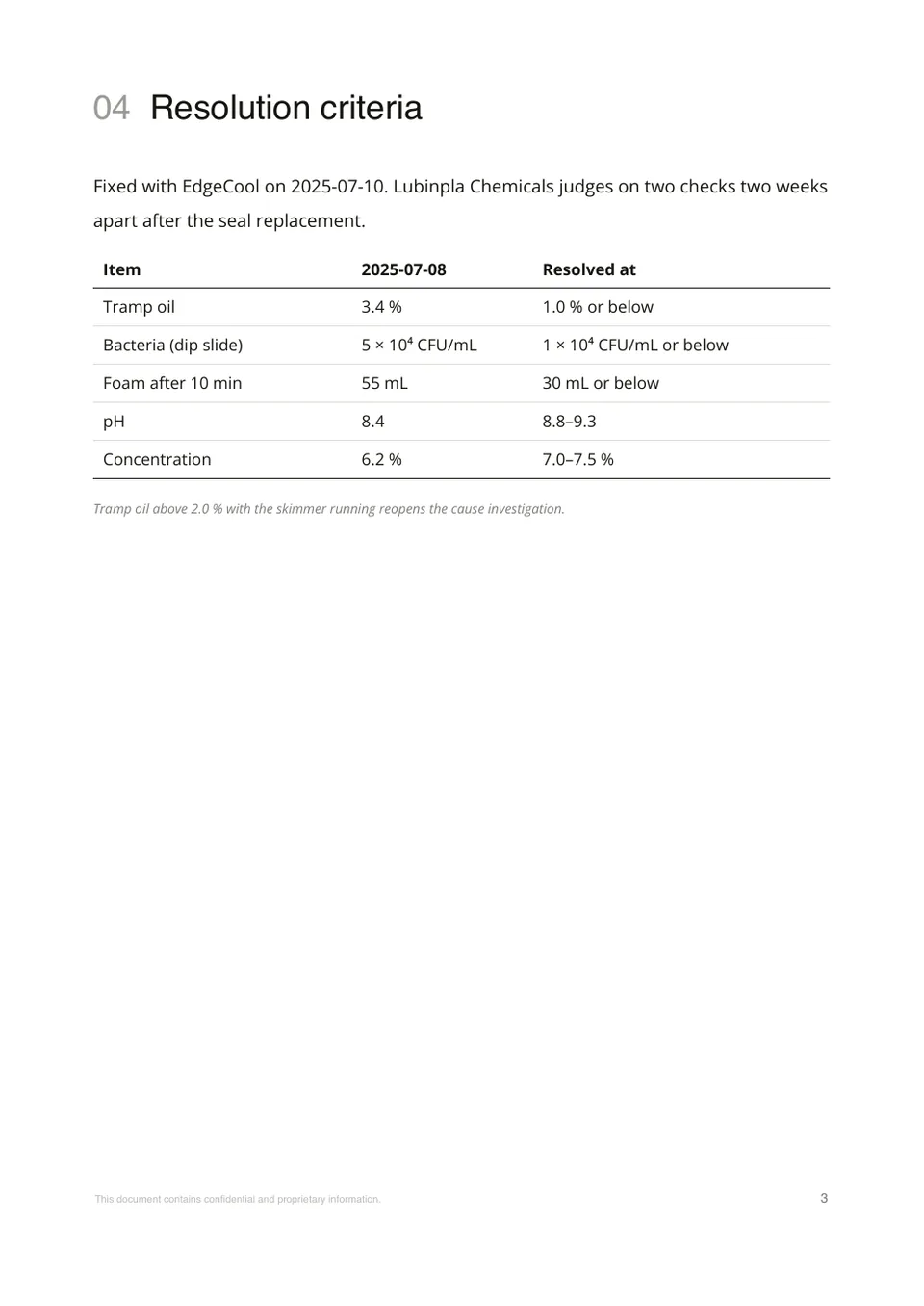
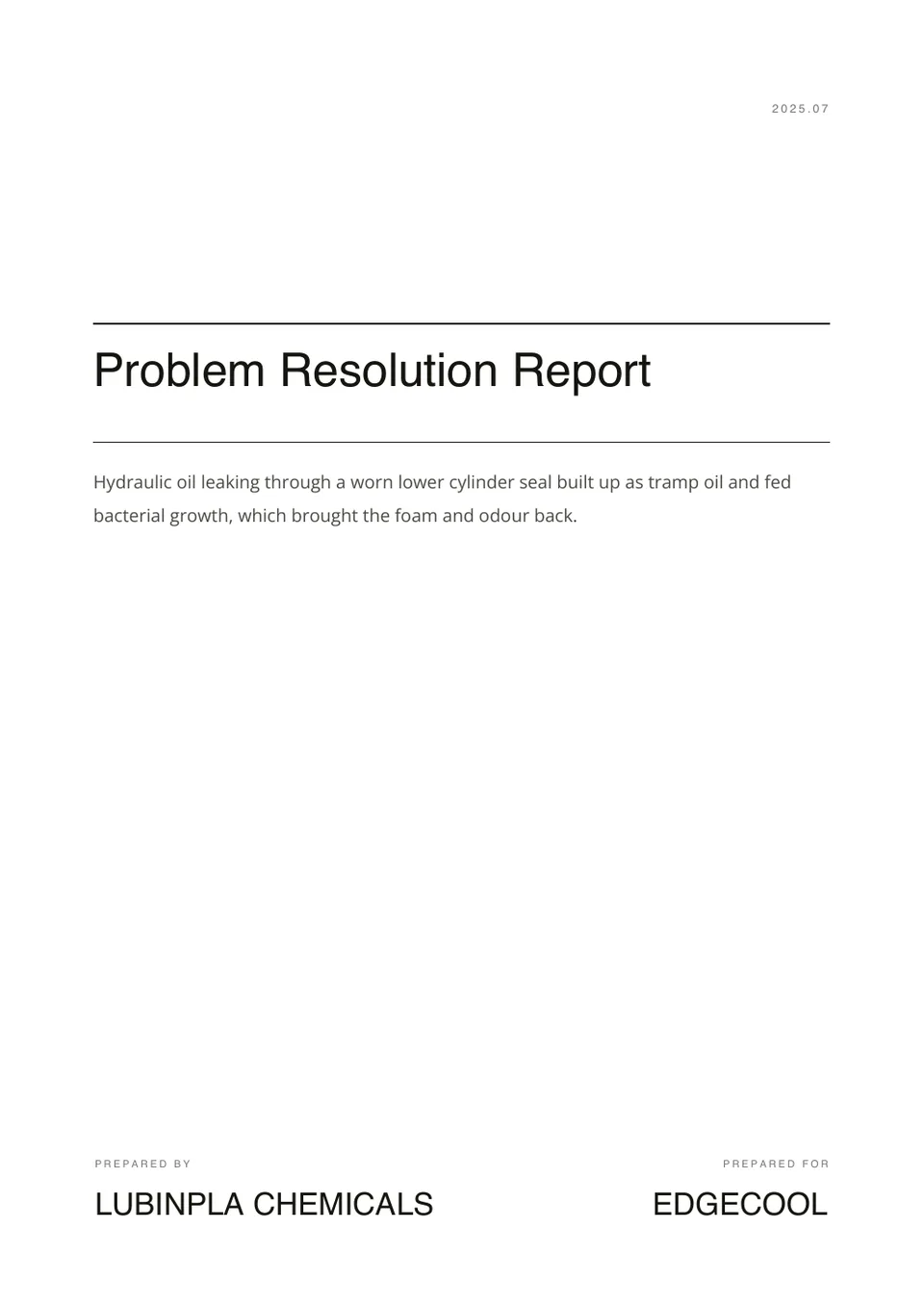
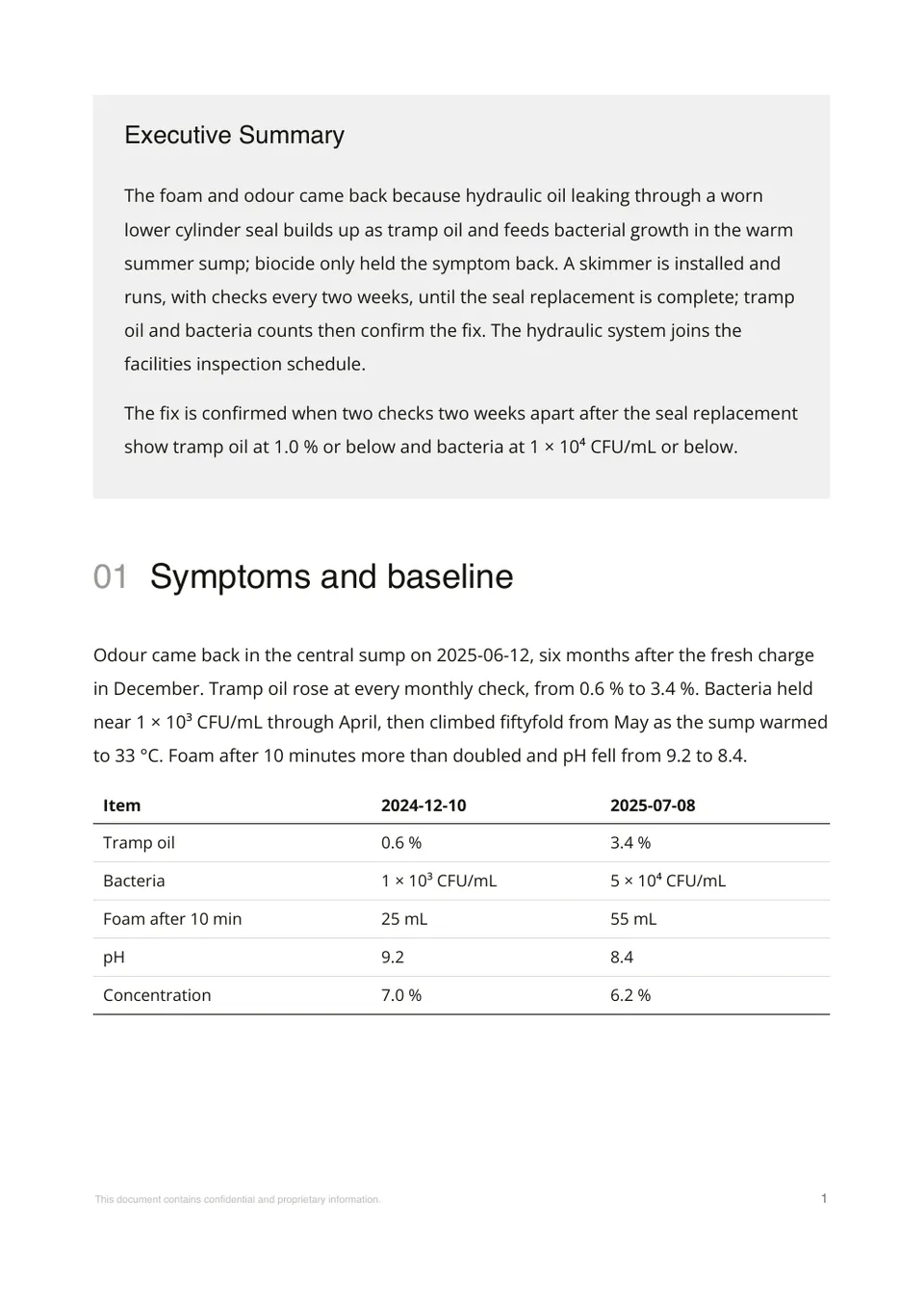
    Each case ends in one document made for it. Rather than listing information, it sets out the evidence and the conclusion so the customer can agree and decide, and the case turns into results.

  • 10x

    More customer inquiries handled per rep

  • 100+

    Factors analyzed per report, on average

  • 95%

    Customer inquiries resolved within the week

  • 80%+

    Less time to a technical answer

Lubinpla KALTECKOREA
Customer story

Competitor comparisons that build customer trust and new sales

Industrial Chemical Distribution, Technical Sales & Support A distributor serving defense, aerospace and wind power manufacturers compares competitor products, researches site problems and keeps each customer's process data in one place. Higher customer satisfaction, lower costs and, above all, new sales. Read the story

Our mission

Our mission is to make technical decisions in specialty chemicals faster and better grounded. Better decisions make industry more productive and lead to a better world.

Agents take on the time-consuming technical work, such as product recommendation, troubleshooting, compatibility assessment, customer analysis and document writing. Judgment and decisions stay with people, and reps spend more of their time with customers.

Your team's procedures and approval steps are set up as tasks, and your documents, each customer's site history, email and calendar are connected. Agents then work the way your organization already works.

What the agent relied on, how it reasoned and what your team decided all stay on record, so anyone who reviews the work or picks it up later can follow it.

Your technical data stays yours.

Read more

Encrypted in transit and at rest. Isolated by organization. Never used to train AI models. Customers see only what you share with their own account.

Always encrypted

Your data is encrypted on its way to us and where it is stored.

No model training

Your inputs, outputs and documents are never used to train AI models.

Isolated workspaces

Your projects, logs and documents are visible only to your own team.

Your data, your control

Delete anything for good at any time, or let the trash clear itself after 30 days.

Questions sales teams ask before they start

What does Lubinpla do?

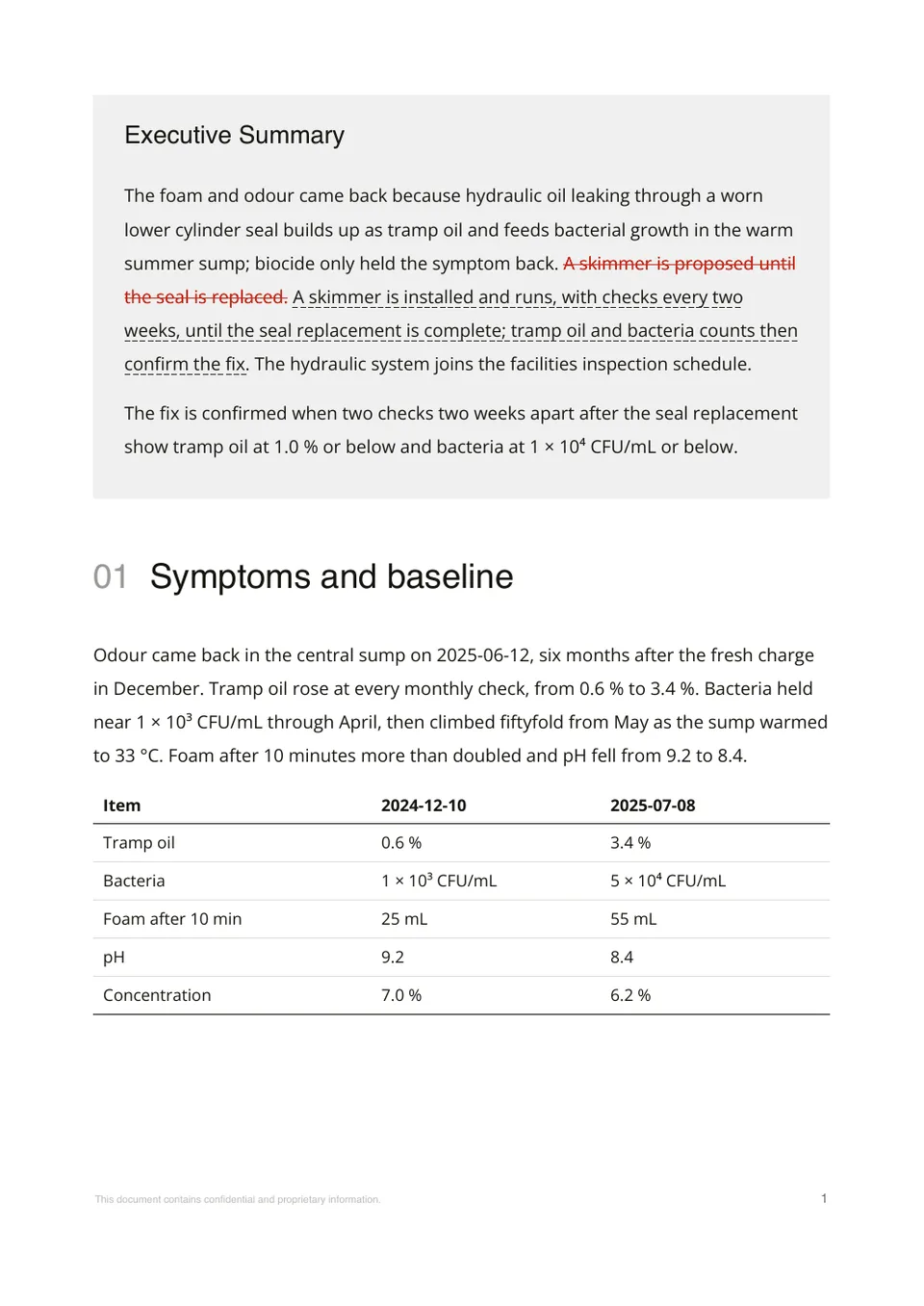
Lubinpla is an AI platform for the technical sales teams of specialty chemical companies. It connects each site's operating conditions and readings to your product documents through technical reasoning, and turns the cases a sale depends on, such as a product recommendation, a failure on site, a trial or a quote, into a document made for that customer. It covers materials protection, lubricants and metalworking fluids, adhesives and sealants, process chemicals and cleaning.

How is it different from a general AI assistant?

A general assistant answers from what it learned on the internet and gives everyone much the same answer. Lubinpla starts from your data sheets, test reports and each customer's site history, and cites the source behind each point. The result is a document written for one customer and one case, not a chat reply.

How does the agent work through a case?

It sets out the customer's conditions and requirement, identifies the factors that matter, and weighs the candidates against your evidence before it reaches a conclusion. Confirmed facts, inferences and open questions are kept apart, so your team can see what the answer rests on and what still needs checking.

What if the agent gets something wrong?

Your team stays in the loop. The agent asks when a step needs your judgment, you can stop a task at any time, and by default the document waits for your approval: accept it or ask for changes. Your team can set other steps to wait as well. Outgoing email waits for approval too, so nothing reaches a customer without your team.

Is our data used to train AI models?

No. Your documents, records and results are used only to do your work in Lubinpla. We never use them to train AI models, and our agreements with the AI services we use don't allow them to either. Each organization's data is kept separate and encrypted.

How we protect your data
What do our customers see?

Only what you share. Through Field Care, you choose the documents, work logs and site records each customer can see, one by one, and nothing is shared by default. Each customer sees only their own items, never your internal notes or another customer's records. Their dedicated agent answers only from what you have shared.

What do we need to get started?

The documents you already have. Upload data sheets, test reports and past site records, and Lubinpla sorts them as they arrive. You don't replace the systems you use today. Gmail and Google Calendar can be connected later, when you want the agent to work with your email.

What does it cost?

You can start free. Paid plans start at $100 a month and include monthly credits for agent work, Field Care and Gmail. There are no per-seat charges, so your whole team can join one plan.

See pricing

Talk to us about your sales team.

Custom plans, custom terms, security reviews and onboarding across teams or branches. Tell us a little about your organization and we will reply with a starting plan.

Contact Sales
HOW A CASE BECOMES A DOCUMENT
  1. 01
    Start from site data and your documents

    Bring in the TDSs, test reports and site records your team already has. Where a case has too little to go on, the agent searches the web for public sources such as manufacturer data and standards.

  2. 02
    State the case

    Describe the customer's situation in plain words. The agent reads the site's conditions and history, proposes the task that fits, and starts when you say go.

  3. 03
    Review the reasoning, step by step

    Each step shows what was considered, what the evidence supports and what was ruled out, with the source behind each point. You can carry on, ask for changes or stop.

  4. 04
    One document for this customer

    The case ends in a document built for that customer: the conclusion, the reasoning, the conditions it depends on and what to do next. Share it through Field Care when you choose.