Epoxy vs Methacrylate Structural Adhesives: Rigidity and Toughness and Substrate Versatility
Summary: Epoxy and methacrylate structural adhesives represent fundamentally different polymer architectures with distinct mechanical behaviors. Epoxy adhesives offer high rigidity and excellent creep resistance through dense crosslinking, while methacrylate adhesives deliver superior toughness and impact resistance through rubber-modified chain-growth polymerization. This article compares these chemistries at the molecular level, evaluates their performance across metals, plastics, and composites, and provides an application matrix that matches joint requirements to the optimal adhesive chemistry.
Table of Contents
I. Two Chemistries, Two Design Philosophies
II. Cure Mechanism Chemistry: Ring-Opening vs Free Radical
III. Mechanical Performance Comparison
IV. Substrate Compatibility and Adhesion Mechanisms
V. Environmental Resistance Profiles
VI. Application Process Considerations
VII. Application Matrix: Joint Requirements to Chemistry
VIII. Field Cases: When Chemistry Choice Determines Outcome
IX. Key Takeaway
X. References
I. Two Chemistries, Two Design Philosophies
Epoxy and methacrylate adhesives are both classified as structural adhesives capable of bearing significant loads in service. However, they achieve structural performance through fundamentally different polymer chemistry, and choosing between them requires understanding these differences rather than simply comparing lap shear values on a data sheet.
A field engineer who selects an adhesive based solely on the highest lap shear number on a data sheet is making the same mistake as sizing a beam by yield strength alone without considering fatigue or corrosion. The adhesive chemistry must match the joint's dominant failure mode.
Where Each Chemistry Dominates
Epoxies dominate in aerospace, electronics, and applications requiring dimensional stability, chemical resistance, and high-temperature performance. Methacrylates dominate in automotive, marine, and applications requiring impact resistance, vibration tolerance, and bonding of dissimilar or difficult substrates. Neither is universally superior. The right choice depends on the joint's loads, environment, substrates, and production speed requirements.
II. Cure Mechanism Chemistry: Ring-Opening vs Free Radical
Understanding the cure mechanism is not academic detail. It directly determines the adhesive's final network structure, which in turn determines every mechanical and environmental property that matters in service.
Epoxy: Step-Growth Ring-Opening Polymerization
Epoxy adhesives cure through the ring-opening of the oxirane (epoxide) group, a highly strained three-membered ring consisting of two carbon atoms and one oxygen atom. The ring strain stores approximately 114 kJ/mol of energy, making oxirane significantly more reactive than ordinary ethers. When a nucleophilic curing agent, typically an amine, attacks the electrophilic carbon of the oxirane ring, the ring opens and forms a new covalent bond while releasing that stored strain energy.
In amine-cured systems, a primary amine group (two active hydrogens) reacts sequentially with two epoxide groups. Standard diamine curing agents have four active hydrogens total, and common epoxy resins like DGEBA (diglycidyl ether of bisphenol A) are difunctional. Early reactions cause chain extension; later reactions between partially reacted chains create crosslinks. At the gel point, an infinite three-dimensional network forms. The hydroxyl groups generated during ring-opening catalyze further reactions, making epoxy cures autocatalytic.
Different curing agents produce different networks. Aliphatic amines (DETA) cure at room temperature with moderate crosslink density. Aromatic amines (DDS) require heat but produce higher crosslink density and Tg for aerospace applications. Latent agents like dicyandiamide (DICY) enable one-component formulations that cure only when heated.
The final network is a densely crosslinked thermoset with permanent covalent bonds that cannot be broken by heating or solvents. A typical structural epoxy has a crosslink molecular weight (Mc) of 200-500 g/mol, meaning a crosslink occurs roughly every 200-500 grams per mole of chain. This tight spacing restricts chain segment mobility, producing a stiff material with excellent creep resistance but very limited capacity for plastic deformation before fracture.
Methacrylate: Free-Radical Chain-Growth Polymerization
Methacrylate adhesives cure through free-radical chain-growth polymerization of methyl methacrylate (MMA) monomer, a fundamentally different mechanism that produces a fundamentally different material.
The most common initiator system uses benzoyl peroxide (BPO) paired with a tertiary amine accelerator such as dimethyl-p-toluidine (DMT). The amine's lone pair attacks the peroxide, breaking the O-O bond and generating both an aminomethyl radical and a benzoyl radical. Both species initiate polymerization independently, enabling room-temperature cure without external heat.
A free radical attacks the C=C double bond in the methacrylate monomer, opening it and transferring the radical to the growing chain end. Propagation is rapid: thousands of monomer units add per chain in less than a second. Termination occurs when two radical chain ends meet.
The resulting polymethacrylate has a linear backbone with pendant methyl ester groups and far lower crosslink density than epoxy (Mc of 2,000-10,000 g/mol versus 200-500 g/mol for epoxy). Structural formulations incorporate core-shell rubber (CSR) particles, a polybutadiene core in a PMMA shell. When a crack tip approaches a CSR particle, the rubber core cavitates, absorbing energy and inducing shear yielding in the surrounding matrix. This increases fracture energy by five to ten times.
The practical implication for field engineers is straightforward: if you load a joint to failure in pure shear, the epoxy fails at a higher load. But if you load a joint in peel, impact, or fatigue, the methacrylate absorbs more energy before failure and is far more tolerant of stress concentrations and cyclic loading.
III. Mechanical Performance Comparison
Figure 1. Epoxy vs Methacrylate Performance Radar
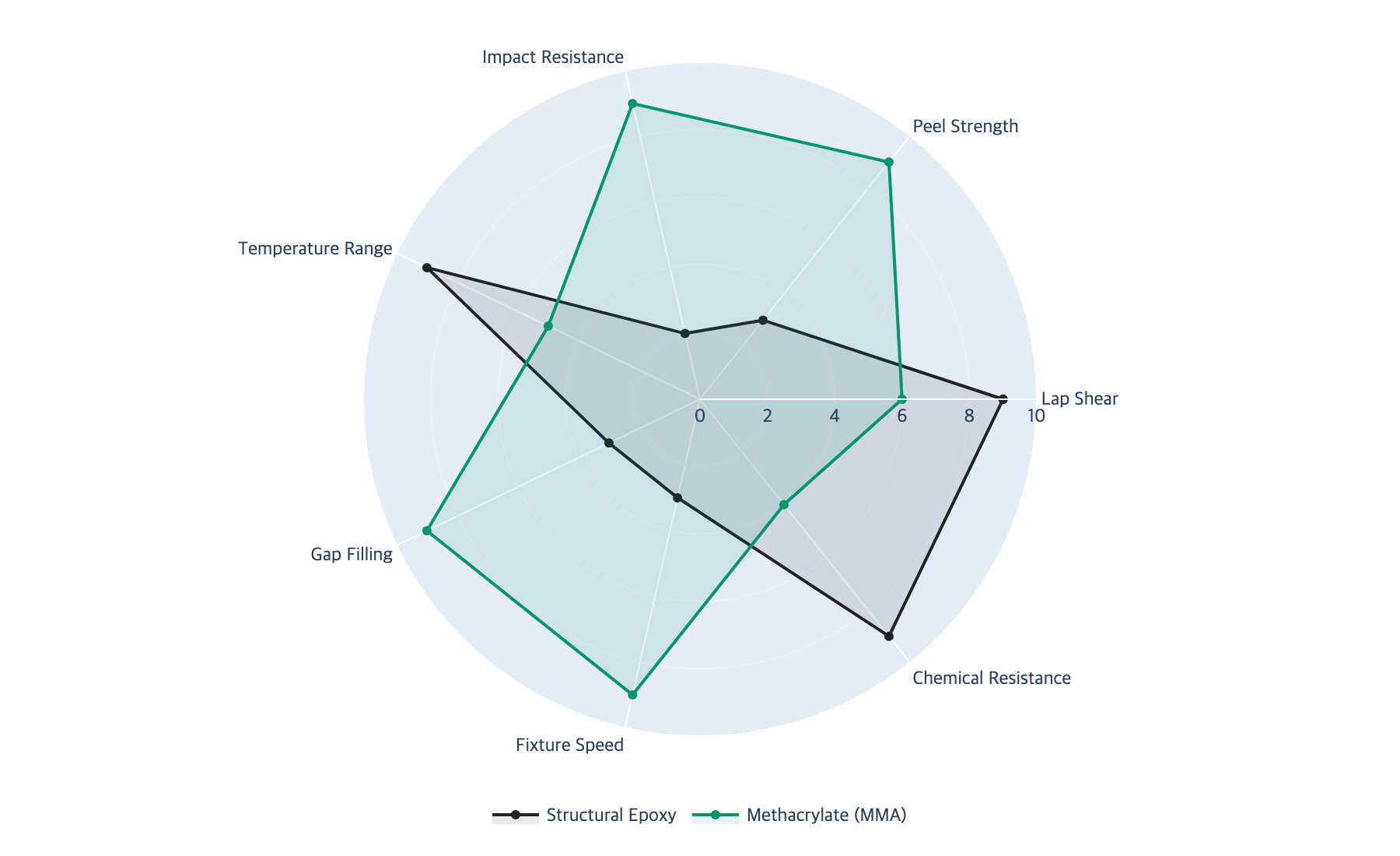
Figure 1b. Head-to-Head Mechanical Performance
Property | Structural Epoxy | Rubber-Toughened Epoxy | Structural Methacrylate |
|---|---|---|---|
Lap shear strength (steel) | 25-35 MPa | 20-28 MPa | 18-25 MPa |
Peel strength (T-peel) | 2-5 N/mm | 6-12 N/mm | 8-20 N/mm |
Impact resistance (Charpy) | Low | Moderate | High |
Elongation at break | 2-5% | 5-15% | 10-40% |
Glass transition temp (Tg) | 80-150C | 60-120C | 50-90C |
Gap-filling capability | Up to 0.5 mm | Up to 1 mm | Up to 5 mm |
Fixture time (25C) | 30-120 min | 30-120 min | 8-20 min |
Operating temp range | -40 to 180C | -40 to 150C | -40 to 120C |
Chemical resistance | Excellent | Good | Moderate |
The data reveals the trade-off clearly. Epoxies lead in lap shear strength, temperature resistance, and chemical resistance. Methacrylates lead in peel strength, impact resistance, elongation, gap-filling, and fixture speed.
Shear Strength: The Number Everyone Reads First
Lap shear strength is the most commonly reported adhesive property, and epoxies consistently deliver the highest values. A well-formulated structural epoxy on grit-blasted steel routinely achieves 25-35 MPa in standard tests (ISO 4587 / ASTM D1002). Methacrylates on the same substrate typically achieve 18-25 MPa.
However, the standard lap shear test uses thick, rigid adherends that distribute stress relatively uniformly across the bond line. In real joints with thin substrates, misalignment, or eccentric loading, stress concentrations develop at the bond line edges, converting nominal shear into local peel and cleavage stresses. Under these conditions, the methacrylate's ability to deform and redistribute stress becomes more valuable than the epoxy's higher nominal shear strength.
Peel Strength: Where Toughness Wins
Peel strength measures resistance to peeling forces that concentrate stress at the bond line edge. The T-peel test (ISO 11339) focuses nearly all the applied force on a narrow strip at the peel front. Structural epoxies typically deliver 2-5 N/mm in T-peel, while structural methacrylates achieve 8-20 N/mm, a difference of four to ten times. Many real-world joints experience peel loading: thin sheet metal bonding, composite panel assembly, dissimilar material joints with differential thermal expansion. In these applications, peel strength is more predictive of service performance than lap shear.
Impact and Fatigue: The Hidden Differentiators
Impact resistance and fatigue life are often overlooked during adhesive selection because they are harder to test and less commonly reported on data sheets. Yet these properties frequently determine whether a bonded joint survives in service.
Under impact loading, the methacrylate's rubber-modified matrix absorbs energy through viscoelastic deformation and rubber particle cavitation. The epoxy's rigid thermoset network shatters. For plant equipment subject to mechanical shock, water hammer, or accidental contact, this difference determines whether a joint survives or catastrophically fails.
Fatigue performance is where the gap becomes most dramatic. Testing by Henkel on structural adhesive fatigue resistance found that methacrylate (MMA) adhesives retained approximately 48% of their initial ultimate strength after fatigue cycling, while epoxy adhesives retained only about 7%. This enormous difference means that for any joint subject to cyclic loading, vibration, or thermal cycling, the methacrylate's fatigue durability can more than compensate for its lower static shear strength.
The mechanism is the same crack-tip blunting that produces high peel strength. In an epoxy under cyclic loading, cracks propagate through the brittle matrix each cycle. In a methacrylate, rubber particles arrest crack growth by absorbing energy at the crack tip, extending fatigue life by orders of magnitude.
IV. Substrate Compatibility and Adhesion Mechanisms
Adhesive chemistry determines not just bulk mechanical properties but also how the adhesive grips the substrate. These mechanisms differ significantly between epoxies and methacrylates.
Metals: Oxide Layer Bonding
Both chemistries bond to metals primarily through interaction with the metal oxide layer. Steel, aluminum, and titanium all have oxide layers ranging from a few nanometers (stainless steel, titanium) to tens of nanometers (aluminum).
Epoxies form strong polar bonds to metal oxides through the hydroxyl groups generated during cure, producing excellent adhesion on grit-blasted or chemically etched surfaces. Methacrylates bond through polar interactions supplemented by mechanical interlocking: the low viscosity of uncured MMA monomer flows into surface micro-roughness before polymerizing. Methacrylates are more forgiving of imperfect surface preparation.
For corrosion-prone environments, epoxies have a structural advantage: lacking hydrolysis-sensitive ester groups, they resist water degradation better. Epoxy laminates retain approximately 90% of interlaminar shear strength after a year of water immersion.
Plastics: Surface Energy and Solvent Welding
Methacrylate adhesives have a decisive advantage on thermoplastic substrates through a mechanism that epoxies cannot replicate.
The MMA monomer is itself a solvent for many thermoplastics. When uncured methacrylate contacts a compatible plastic surface (ABS, PVC, polycarbonate, acrylics, ASA), it partially dissolves and swells the surface layer. Polymer chains from the substrate diffuse into the monomer-rich zone, and monomer diffuses into the substrate. When the adhesive cures by polymerization, the result is an interpenetrating zone where substrate chains are physically entangled with the cured adhesive. This interpenetrating network cannot be separated without breaking polymer chains, producing bond strengths that often exceed the cohesive strength of the substrate itself. Parts bonded with methacrylate adhesives frequently fail in the substrate rather than at the bond line.
Unlike traditional solvent welding, methacrylate adhesives are 100% reactive solids that cure by polymerization rather than evaporation, with minimal volume change and a tough interlayer in the bond line.
Epoxies rely solely on surface adhesion when bonding plastics. The resin molecules cannot dissolve the plastic surface, and crosslinking locks the network before diffusion occurs. Epoxies achieve adequate adhesion on high-surface-energy plastics (nylon, polycarbonate) but are marginal on lower-energy substrates.
For polyolefins (polyethylene, polypropylene, PTFE), neither chemistry bonds without surface treatment (flame, plasma, or primer). Even with treatment, methacrylates outperform epoxies because their flexibility distributes peel stresses at the thin treated interface.
Composites: Resin Compatibility and Matrix Interpenetration
Fiber-reinforced composites present a unique challenge because the adhesive must bond to the matrix resin, not the fibers. Epoxies bond well to epoxy-matrix composites through chemical affinity: similar functional groups promote strong polar interactions. On properly prepared surfaces, epoxy-to-epoxy bonds can approach the cohesive strength of the matrix.
Methacrylates bond to a broader range of composite matrices because MMA monomer can dissolve and interpenetrate the surface resin of polyester, vinyl ester, and acrylic composites. For marine applications with fiber-reinforced polyester, methacrylate is the standard structural bonding choice. On thermoplastic-matrix composites (PEEK, PPS, PA), methacrylates outperform epoxies through partial solvation of the matrix surface.
V. Environmental Resistance Profiles
Adhesive joints in industrial service face temperature extremes, humidity, chemical splash, UV exposure, and combinations of these factors. The two chemistries respond to environmental stress in characteristically different ways.
Temperature Resistance
The glass transition temperature (Tg) is the single most important parameter. Above Tg, the adhesive transitions from a rigid glassy state to a rubbery state, and stiffness and creep resistance drop dramatically.
Structural epoxies achieve Tg values from 80C (room-temperature-cured aliphatic amine systems) to over 150C (heat-cured aromatic amine or anhydride systems), with some aerospace formulations exceeding 200C. Structural methacrylates typically have Tg values of 50-90C. For continuous service above 100-120C, methacrylates are generally not suitable, though some automotive formulations withstand 220-230C for short periods (up to 35 minutes) without strength loss.
Humidity and Water Resistance
Epoxies have a structural advantage: the backbone lacks hydrolysis-sensitive ester groups. Epoxy joints retain approximately 80% of load capacity after saline exposure and 75% after hygrothermal exposure.
Methacrylates contain ester groups susceptible to hydrolysis under aggressive conditions, showing measurable strength loss in high-humidity environments over time. For immersed or continuous high-humidity service, epoxies are safer.
Chemical Resistance
The dense crosslink network and absence of hydrolyzable groups give epoxies outstanding resistance to solvents (acetone, MEK, toluene), weak acids (dilute sulfuric, hydrochloric), and alkalis (sodium hydroxide, potassium hydroxide). Specialty formulations resist concentrated acids and aggressive solvents.
Methacrylates have moderate chemical resistance. The ester groups are vulnerable to strong acids and bases that hydrolyze the ester bond. Methacrylates also have limited resistance to ketone and ester solvents, which can swell or soften the cured adhesive. For chemical processing environments, epoxy is almost always the correct choice.
VI. Application Process Considerations
How the adhesive is mixed, applied, and cured directly impacts production throughput, process reliability, and total cost of ownership.
Mix Ratio and Dispensing
Structural epoxies use stoichiometry-determined mix ratios (1:1, 2:1, 4:1, or 10:1 by volume). Deviations degrade properties, making accurate metering essential.
Structural methacrylates use 1:1 or 10:1 ratios, with 10:1 systems more forgiving of variation. Some systems use a separate surface activator wiped onto one substrate, eliminating in-line mixing equipment.
Pot Life, Fixture Time, and Full Cure
Room-temperature-curing epoxies have pot lives from 20 minutes to several hours. Fixture strength develops in 30-120 minutes, with full cure in 24-72 hours. Heat curing accelerates this but requires ovens and limits assembly size.
Methacrylate adhesives have working times of 3-25 minutes, remaining liquid until gelling quickly as polymerization accelerates. Fixture strength develops in 8-20 minutes at room temperature. Full cure takes 4-24 hours. For high-volume production or field repair, the methacrylate's fast fixture time is often decisive.
Gap-Filling and Fixturing
Epoxies perform best in thin bond lines (0.1-0.5 mm); most manufacturers specify 0.5-1.0 mm maximum. Methacrylates tolerate bond lines up to 5 mm, a major advantage in field repair and bonding parts with variable fit-up.
Exotherm and Shrinkage
Epoxy exotherms are moderate and distributed over long cure times. Methacrylate polymerization is more exothermic with heat concentrated in a shorter period, though manageable in typical bond lines under 5 mm. Cure shrinkage is minimal for both: epoxies shrink 1-3% by volume, methacrylates 2-4%.
VII. Application Matrix: Joint Requirements to Chemistry
Figure 2. Key Property Comparison
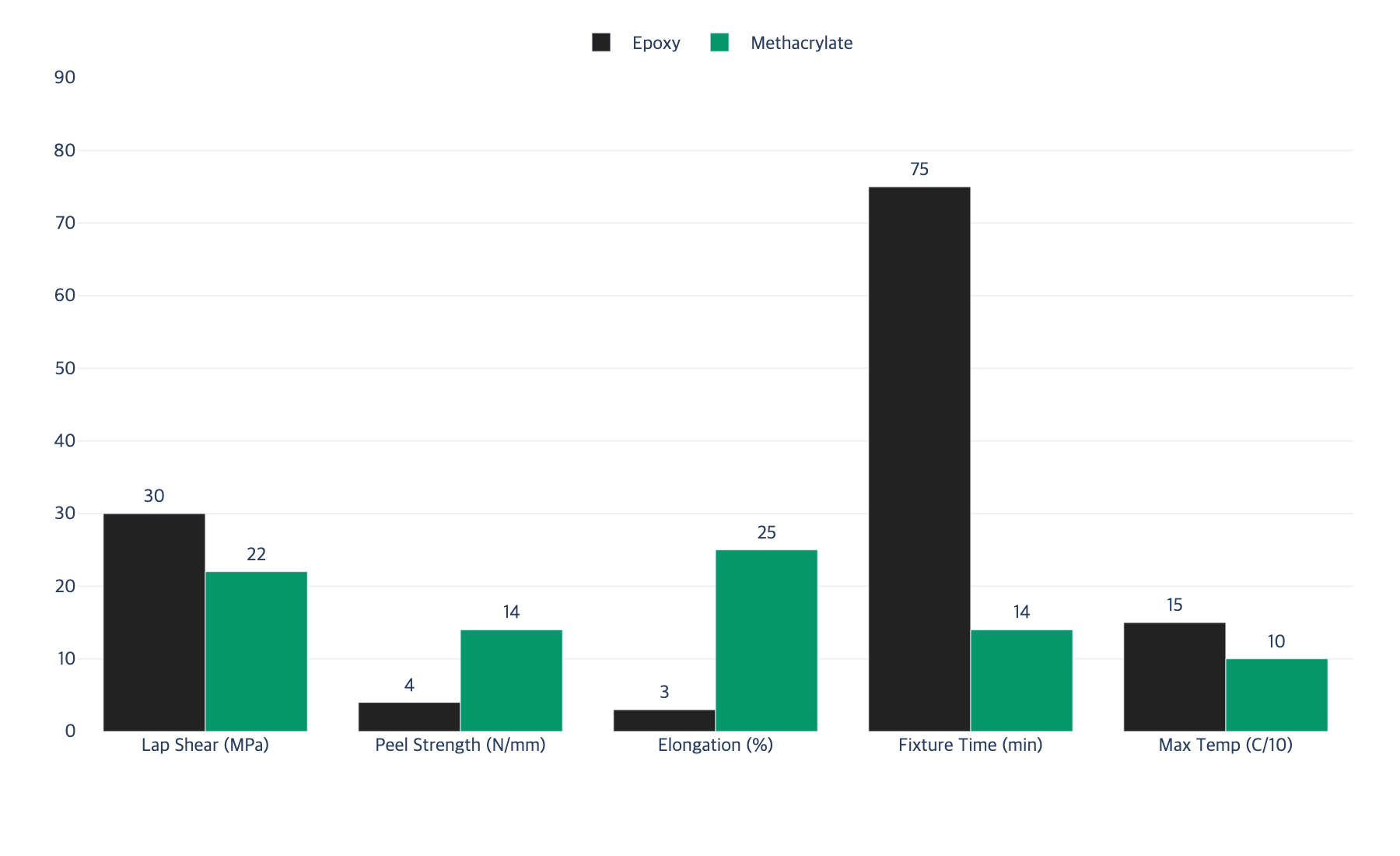
Figure 2b. Adhesive Selection Matrix by Application Requirement
Joint Requirement | Epoxy Preferred | Methacrylate Preferred |
|---|---|---|
High static load, minimal deflection | Yes | No |
Vibration and impact resistance | No | Yes |
Temperature above 120C | Yes | No |
Gap filling above 1 mm | No | Yes |
Dissimilar material bonding | Possible | Preferred |
Plastic substrate bonding | Limited | Excellent (compatible plastics) |
Fast fixture time required | No (30-120 min) | Yes (8-20 min) |
Chemical/solvent exposure | Yes | Limited |
Precision alignment required | Yes (minimal shrinkage) | Less suitable (slight shrinkage) |
Outdoor/UV exposure | Yes (with UV stabilizers) | Moderate |
Fatigue and cyclic loading | Poor retention (~7%) | Excellent retention (~48%) |
Field repair with variable fit-up | Difficult (tight gap tolerance) | Well suited (up to 5 mm gaps) |
For static shear loads in controlled environments, epoxy delivers the highest strength. For dynamic loading, gap filling, or plastic/composite substrates, methacrylate provides superior overall performance. When in doubt, the decision comes down to whether the critical failure mode is shear (epoxy) or peel/impact (methacrylate).
The fatigue data deserves emphasis: the methacrylate's retention of nearly half its ultimate strength under cyclic loading versus the epoxy's 7% makes it dramatically more reliable for any dynamically loaded joint.
VIII. Field Cases: When Chemistry Choice Determines Outcome
Case 1: Automotive Bracket Bonding
Company A used a rigid structural epoxy (28 MPa lap shear) to bond steel brackets to a body panel. Joints passed static pull tests but debonded under road vibration within 6 months. Root cause: fatigue crack initiation at bond line edges, where the epoxy's low peel strength allowed cracks to propagate under cyclic peel loads from panel flexing. Replacing with a methacrylate (20 MPa lap shear, 15 N/mm peel) eliminated debonding. The epoxy was "stronger" by the data sheet, but the methacrylate was stronger in the way that mattered.
Case 2: Process Equipment Bonding
Company B bonded stainless steel flanges in a chemical processing environment with continuous pH 12 alkaline exposure at 80C. A methacrylate was selected for fast fixture time. After 3 months, the adhesive softened and joints leaked: the methacrylate's Tg of 70C was below service temperature, and ester groups were hydrolyzed by the alkaline environment. A heat-cured epoxy (Tg 140C) resolved the problem permanently. Application convenience cannot override service environment requirements.
Case 3: Composite Marine Panel Assembly
Company C assembled fiberglass reinforced polyester (FRP) panels for a marine vessel using a structural epoxy. Production bond strengths were inconsistent and panels debonded during sea trials. The epoxy's adhesion to polyester was highly sensitive to surface preparation quality, and inconsistent manual sanding produced variable results. Switching to a methacrylate, which interpenetrated the polyester resin surface, eliminated sensitivity to preparation variability and produced consistent bonds across the production run.
IX. Key Takeaway
Epoxy adhesives provide high rigidity, excellent creep resistance, and superior chemical/thermal performance through dense thermoset crosslinking via oxirane ring-opening polymerization
Methacrylate adhesives provide superior toughness, peel resistance, and impact absorption through rubber-modified free-radical chain-growth polymerization
For peel-dominated joint loading (thin sheets, dissimilar materials, vibration), methacrylate outperforms epoxy despite lower lap shear values
Fatigue testing shows methacrylates retain approximately 48% of ultimate strength under cyclic loading versus only 7% for epoxies, a critical difference for any dynamically loaded joint
Methacrylate's solvent welding capability on compatible plastics and composites provides adhesion mechanisms that epoxy cannot replicate on these substrates
Epoxy's dense crosslink network and chemically resistant backbone make it the only viable choice for continuous high-temperature or aggressive chemical exposure
Match the adhesive chemistry to the joint's critical failure mode (shear vs. peel), service environment (temperature, chemicals), and substrate combination
What if you didn't have to make this decision alone?
Choosing between epoxy and methacrylate is only the beginning. Within each chemistry family, there are hundreds of formulations with different cure speeds, temperature ratings, flexibility grades, and substrate-specific primers. The real challenge is not choosing the chemistry class but selecting the exact product that matches your joint's unique combination of substrates, loads, environment, and production constraints.
This is where engineering teams spend hours cross-referencing data sheets and running qualification tests, sometimes discovering months later that a different formulation would have been better. A joint that looks like a straightforward epoxy application on paper might actually need a toughened methacrylate because thermal cycling generates peel stresses that data sheet lap shear comparisons miss entirely.
Lubinpla's AI platform changes this equation. By analyzing joint geometry, loading profile, substrate materials, service environment, and historical performance data, the platform recommends the specific product, identifies the dominant failure mode your data sheet comparison might overlook, and provides mechanism-based justification for its recommendation. It is the difference between selecting an adhesive from a catalog and engineering an adhesive joint from first principles, at the speed your production schedule demands.
X. References
[1] PMC, "Network Formation and Physical Properties of Epoxy Resins for Future Practical Applications", 2022. https://pmc.ncbi.nlm.nih.gov/articles/PMC9327093/
[2] PMC, "Strength in Adhesion: Multi-Mechanics Review of Polymer Bonding", 2024. https://pmc.ncbi.nlm.nih.gov/articles/PMC12526568/
[3] ResearchGate, "Creep Behaviour of Epoxy Structural Adhesives", 2024. https://www.researchgate.net/publication/390184380
[4] Wiley, "Fatigue Crack Growth in Acrylic Adhesive Joints", 2023. https://onlinelibrary.wiley.com/doi/full/10.1111/ffe.13908
[5] ScienceDirect, "Cyclic Fatigue Testing of Polyurethane Adhesive Joints", 2021. https://www.sciencedirect.com/science/article/pii/S2666330921000133
[6] MDPI Polymers, "Temperature and Humidity Effects on Adhesive Properties", 2023. https://www.mdpi.com/2073-4360/15/2/339
[7] PMC, "Fatigue Properties of Methacrylic Adhesive Plexus MA300", 2025. https://pmc.ncbi.nlm.nih.gov/articles/PMC12073018/
[8] Henkel, "Fatigue Resistance of Structural Adhesives", 2024. https://www.ellsworth.com/resources/insights/white-papers/fatigue-resistance-of-structural-adhesives/
[9] ScienceDirect, "Structural Adhesive Creep on CFRP Steel Beams", 2024. https://www.sciencedirect.com/science/article/abs/pii/S0143974X24007284
[10] ResearchGate, "Creep and Aging of Adhesive Joints Under Static Loads", 2022. https://www.researchgate.net/publication/359007656
[11] EPFL, "Fatigue of Structural Adhesive Joints", 2024. https://infoscience.epfl.ch/server/api/core/bitstreams/f0638bbf-773a-4403-8279-bb9c5120ae27/content
[12] Henkel, "Structural Adhesive Technology Guide", 2024. https://www.henkel-adhesives.com/
[13] 3M, "Structural Adhesive Selection Guide", 2024. https://www.3m.com/
[14] Huntsman, "Araldite Structural Adhesive Portfolio", 2024. https://www.huntsman.com/
[15] Permabond, "MMA Structural Adhesive Technical Guide", 2024. https://www.permabond.com/
[16] Parson Adhesives, "Structural Methacrylate Adhesives", 2024. https://www.parsonadhesives.com/partite-parbond/structural-methacrylate-adhesives.htm
Powered by Lubinpla
Discover how technical teams solve complex challenges faster with AI.