Optimizing Surface Preparation for Maximum Adhesive Bond Strength: The Variables That Matter Most
Summary: Adhesive bond strength varies significantly with surface preparation quality, yet most production environments use a single preparation method regardless of substrate, contamination level, or adhesive type. This article analyzes the mechanism by which surface preparation methods (mechanical abrasion, chemical etching, corona/plasma treatment) modify the substrate surface, presents an optimization matrix that matches preparation intensity to actual bonding requirements, and introduces contact angle measurement as a rapid in-line quality verification method. The result is a framework that prevents both under-preparation (weak bonds) and over-preparation (unnecessary cost).
Table of Contents
I. Why Surface Preparation Is the Most Controllable Variable
II. How Surface Preparation Modifies the Adhesion Interface
III. Surface Preparation Methods Compared
IV. Chemical Etching: Substrate-Specific Protocols That Drive Durability
V. Plasma and Corona Treatment: Parameters That Determine Success or Failure
VI. Optimization Matrix: Substrate x Adhesive x Constraint
VII. Contact Angle Measurement as In-Line Quality Check
VIII. Integrating Surface Quality Checks into Production Lines
IX. Key Takeaway
X. References
I. Why Surface Preparation Is the Most Controllable Variable
In any adhesive bonding process, bond strength depends on three factors: the adhesive's cohesive strength (determined by its chemistry and cure), the interfacial adhesion between adhesive and substrate (determined by surface preparation), and the joint design (determined by engineering). Of these three, surface preparation is the most controllable and adjustable in a production environment. Adhesive chemistry is fixed by the product selection. Joint design is fixed by the engineering drawing. Surface preparation is the process variable that can be optimized, monitored, and adjusted to maximize bond performance.
Field engineers who have investigated adhesive bond failures know this pattern well. The adhesive is rarely the root cause. In post-mortem analysis of failed bonds, the failure mode tells the story. Adhesive failure, where the adhesive separates cleanly from the substrate surface leaving no residue, almost always points to inadequate surface preparation. Cohesive failure, where the adhesive itself fractures internally, indicates the bond interface was stronger than the adhesive material and represents the ideal failure mode in a properly prepared joint. When failure analysis consistently reveals adhesive failure on one substrate but cohesive failure on another within the same assembly, the surface preparation protocol for the failing substrate needs re-evaluation.
The Common Mistake
Most production facilities standardize on a single surface preparation method, typically solvent wipe or light abrasion, for all bonding operations regardless of the substrate material, contamination type, or adhesive chemistry. This one-size-fits-all approach leads to two problems. Under-preparation on critical bonds produces joints that fail below their potential strength. Over-preparation on non-critical bonds wastes time, consumables, and energy on preparation that exceeds what the adhesive requires.
The cost of this mismatch is not trivial. Under-preparation drives warranty claims, field repairs, and in safety-critical applications, potential liability. Over-preparation drives consumable waste (abrasive media, solvents, etch chemicals), longer cycle times, and in some cases, environmental compliance costs for chemical disposal. A structured framework that matches preparation intensity to actual requirements eliminates both failure modes.
II. How Surface Preparation Modifies the Adhesion Interface
Surface preparation works by modifying three properties of the substrate surface that directly affect adhesive wetting and bonding. Understanding the mechanism behind each property allows engineers to select the preparation method that addresses the actual deficiency rather than applying a blanket treatment.
Surface Cleanliness
The most basic requirement is removing contaminants (oils, greases, oxides, particulates) that physically block adhesive-substrate contact. Even a monomolecular layer of contamination can reduce bond strength by 50 percent or more because the adhesive bonds to the contaminant rather than to the substrate. In metalworking environments, the most common contaminants are machining oils, drawing compounds, corrosion-preventive coatings, and fingerprint residues. Each requires a different removal approach. Hydrocarbon oils dissolve readily in organic solvents. Water-soluble coolants respond better to alkaline cleaners. Silicone-based release agents are particularly problematic because they spread into monomolecular films that are invisible yet dramatically reduce adhesion, and they resist most standard cleaning procedures.
The practical implication is that "cleaning" is not a generic step. A solvent wipe that effectively removes light machining oil will do nothing against a baked-on drawing compound or a silicone contaminant. Identifying the specific contaminant type before selecting the cleaning method is the first step in any rational surface preparation protocol.
Surface Energy
Surface energy determines whether the adhesive wets (spreads across) the substrate surface. For an adhesive to bond effectively, the substrate surface energy must be higher than the adhesive's surface tension. The general rule in adhesion science is that the substrate surface energy should exceed the adhesive's surface tension by at least 7 to 10 mJ/m2 to ensure spontaneous wetting and good contact.
Metals naturally have high surface energy and are easily wetted by adhesives. Clean copper has a surface energy of approximately 1,103 mJ/m2, aluminum approximately 840 mJ/m2, and zinc approximately 753 mJ/m2. Even stainless steel, with its passive chromium oxide layer, maintains surface energy in the range of 700 to 1,100 mJ/m2 when properly cleaned. At these energy levels, virtually any adhesive will wet the surface spontaneously.
Plastics present a fundamentally different challenge. Most commodity polymers have surface energies between 20 and 45 mJ/m2. Untreated polyethylene sits at approximately 31 mJ/m2, untreated polypropylene at approximately 29 to 32 mJ/m2, and PTFE (Teflon) at approximately 18 mJ/m2. These values fall below the surface tension of most structural adhesives (typically 35 to 45 mJ/m2), meaning the adhesive will bead up on the surface rather than spreading into intimate contact. No amount of cleaning or abrasion will change this fundamental energy mismatch. Only treatments that chemically modify the surface, introducing polar functional groups, can raise the surface energy above the wetting threshold.
The following table summarizes surface energy values across material categories that are commonly encountered in industrial bonding applications.
Material | Condition | Surface Energy (mJ/m2) | Wettability by Structural Adhesives |
|---|---|---|---|
Copper | Clean | ~1,103 | Excellent |
Aluminum | Clean | ~840 | Excellent |
Zinc | Clean | ~753 | Excellent |
Stainless steel | Passivated | 700-1,100 | Excellent |
Mild steel | Clean, degreased | 700-1,000 | Excellent |
Glass | Clean | 300-500 | Excellent |
Nylon (PA6) | Untreated | ~46 | Good |
PET | Untreated | ~43 | Marginal |
ABS | Untreated | ~35-42 | Marginal |
Polycarbonate | Untreated | ~34-38 | Marginal |
Polyethylene (HDPE) | Untreated | ~31 | Poor |
Polypropylene | Untreated | ~29-32 | Poor |
PTFE | Untreated | ~18 | Very poor |
The boundary between "marginal" and "poor" wettability is the threshold that separates substrates that may bond adequately with careful adhesive selection from substrates that require surface energy modification before any adhesive will perform reliably.
Surface Topography
Micro-roughness created by abrasion, blasting, or etching increases the effective bonding area and creates mechanical interlocking between the adhesive and the substrate. The relationship between roughness and bond strength is not linear. Moderate roughness (Ra 1 to 5 micrometers) generally improves adhesion by increasing the actual surface area available for bonding, which can be two to three times the projected geometric area on a well-abraded surface. The adhesive flows into micro-valleys and cures, creating a physical interlock that supplements the chemical adhesion.
Excessive roughness, however, can create voids and stress concentrators that weaken the bond. When surface valleys are too deep or too narrow for the adhesive to fully penetrate, air pockets remain trapped at the interface. These voids act as crack initiation points under load. The optimal roughness profile depends on the adhesive's viscosity and gap-filling capability. Low-viscosity adhesives can penetrate finer surface features, while high-viscosity paste adhesives require wider, more open roughness profiles for full penetration.
III. Surface Preparation Methods Compared
Figure 1. Bond Strength by Preparation Method and Substrate
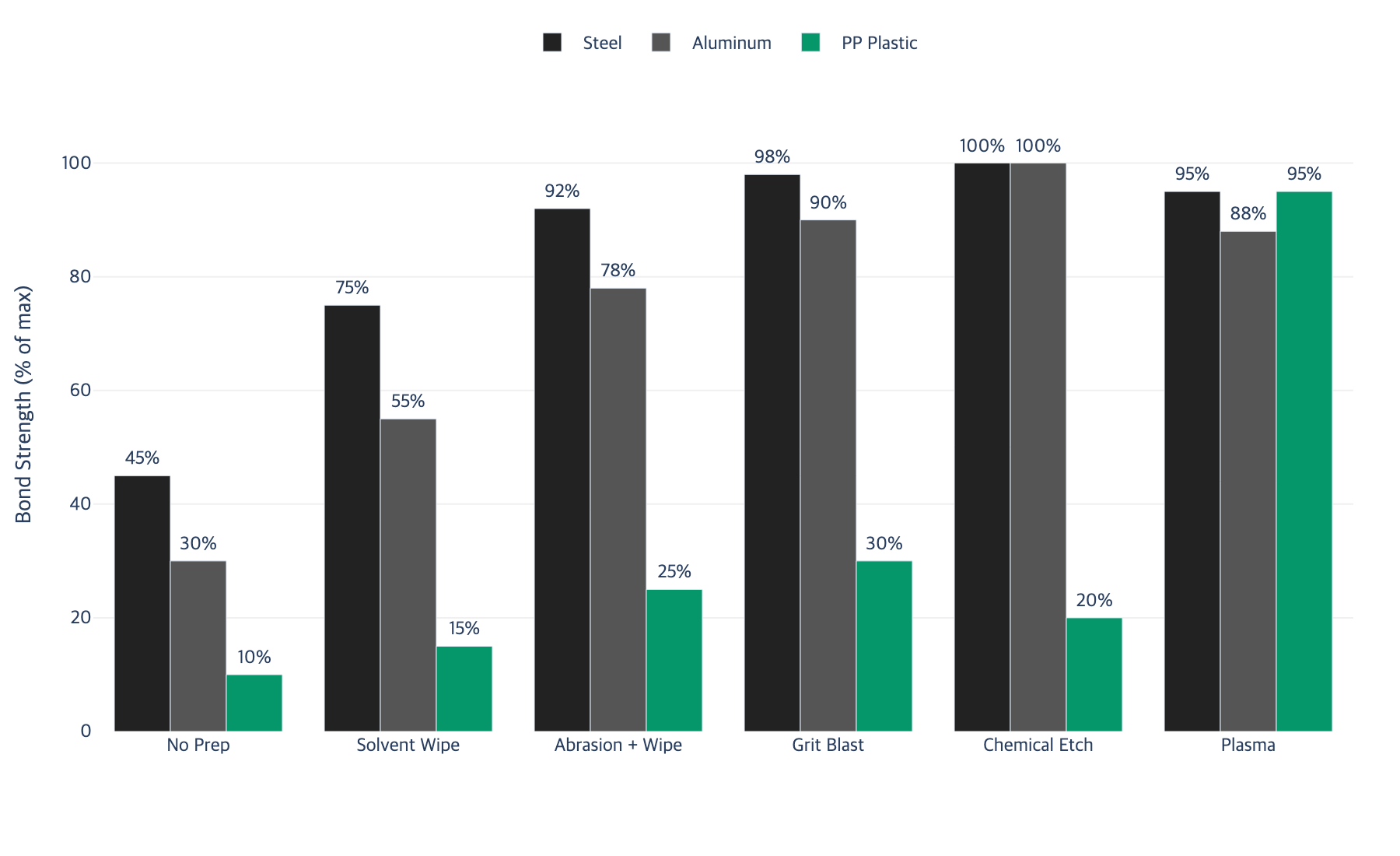
Figure 1b. Surface Preparation Methods: Mechanism and Effectiveness
Method | Mechanism | Contaminant Removal | Surface Energy Increase | Roughening | Typical Substrates |
|---|---|---|---|---|---|
Solvent wipe (IPA, acetone) | Dissolves organic films | Good (light oils) | None | None | All metals, some plastics |
Alkaline cleaning | Emulsifies oils, removes oxides | Excellent | Moderate | None | Metals |
Mechanical abrasion (sandpaper, Scotch-Brite) | Physical removal + roughening | Good | Low | High | Metals, composites |
Grit blasting (alumina, glass bead) | Impact removal + roughening | Excellent | Moderate | Very high | Metals, composites |
Chemical etching (chromate, FPL) | Selective oxide dissolution | Excellent | High | Moderate | Aluminum, titanium |
Corona treatment | Electrical discharge oxidation | None (clean surface required) | Very high | None | Plastics, films |
Plasma treatment | Gas-phase surface activation | Moderate | Very high | Slight | All materials |
Flame treatment | Thermal oxidation | Moderate | High | None | Polyolefins |
Each method has distinct strengths and limitations that make it appropriate for specific substrate-contaminant-adhesive combinations. Solvent wiping is fast and simple but only removes light contamination and does not modify surface energy or topography. It works well as a final cleaning step on metals but is insufficient as a standalone preparation for structural bonds on contaminated substrates. Mechanical abrasion creates excellent roughness for mechanical interlocking but generates particulate contamination that must be removed with a subsequent cleaning step, and it does not increase surface energy on low-energy plastics.
Alkaline cleaning is the workhorse method for metal substrates in production environments. It removes a wide range of organic contaminants (oils, greases, drawing compounds) through emulsification and saponification. Heated alkaline baths (50 to 70 degrees Celsius) are particularly effective and can be integrated into automated wash systems with consistent results. The limitation is that alkaline cleaning does not create micro-roughness, so it is often followed by a mechanical or chemical roughening step for structural bonds.
Grit blasting with aluminum oxide (alumina) media produces excellent results on metals and composites, combining contaminant removal with aggressive surface roughening. The key process variables are media type, particle size, blast pressure, standoff distance, and blast angle. White aluminum oxide in the 50 to 80 mesh range at 40 to 60 psi is a common starting point for structural bonding applications. The primary production concern is containment: grit blasting generates significant particulate waste and requires enclosed blast cabinets or rooms with dust extraction.
IV. Chemical Etching: Substrate-Specific Protocols That Drive Durability
Chemical etching goes beyond cleaning and roughening. It creates a controlled oxide layer on the metal surface that provides both high surface energy and a micro-porous topography optimized for adhesive penetration. The chemistry must be matched to the specific metal substrate because the oxide formation mechanism differs for each alloy system.
Aluminum Alloys
Aluminum is the metal most extensively studied for adhesive bonding, driven by decades of aerospace research. Three primary etch processes have been developed, each producing a different oxide morphology.
The FPL etch (Forest Products Laboratory etch), also known as the sulfuric acid-sodium dichromate etch, was one of the earliest standardized processes. It uses a mixture of sulfuric acid and sodium dichromate at 60 to 65 degrees Celsius with an immersion time of 10 to 12 minutes. The FPL etch produces a thin, whisker-like oxide layer approximately 40 nanometers thick that provides excellent initial bond strength with phenolic and epoxy adhesives. The primary limitation of FPL is environmental: the hexavalent chromium content creates significant disposal and worker exposure concerns, driving the industry toward chromium-free alternatives.
The P2 etch (phosphoric acid-based) was developed as a less toxic alternative. It uses a ferric sulfate and sulfuric acid solution and produces bond strengths and durability comparable to the FPL etch. The P2 process eliminates hexavalent chromium from the etch step while maintaining the micro-porous oxide structure necessary for long-term bond durability.
Phosphoric acid anodizing (PAA) represents a further advancement. Rather than simple immersion etching, PAA uses an electrochemical process in phosphoric acid solution (typically 10 percent concentration at 20 to 25 degrees Celsius, with anodizing voltage of 10 to 15 volts for 20 to 25 minutes). PAA produces a thicker, more porous oxide layer than either FPL or P2 etching. Bonds formed with PAA-treated adherends exhibit superior durability during exposure to humid environments compared to those formed with FPL-treated adherends, particularly when epoxy adhesives are used. This durability advantage has made PAA the preferred pretreatment for primary structural bonds in aerospace applications.
Steel and Stainless Steel
Carbon steel requires a different approach than aluminum. The most common chemical preparation for steel is acid pickling, typically using phosphoric acid (10 to 15 percent concentration at room temperature, immersion for 5 to 10 minutes) or a proprietary iron phosphate conversion coating. The phosphoric acid treatment removes surface rust and mill scale while depositing a thin iron phosphate layer that improves adhesion and provides temporary corrosion protection.
Stainless steel presents a unique challenge because its native chromium oxide passive layer, while providing excellent corrosion resistance, is relatively chemically inert and provides a weaker bonding surface than might be expected. Passivation with citric acid or nitric acid (per ASTM A967) refreshes this oxide layer and removes free iron from the surface but does not create the micro-roughness that improves mechanical interlocking. For structural bonds on stainless steel, a combination of grit blasting followed by solvent wipe is often more effective than chemical etching alone.
Titanium
Titanium alloys used in aerospace and medical applications require specialized etch processes. The most common is the sodium hydroxide anodize (SHA) process or the chromic acid anodize (CAA). The Turco 5578 alkaline etch (sodium hydroxide-based, 90 to 95 degrees Celsius, 3 to 5 minutes immersion) produces a micro-rough oxide surface with excellent adhesion characteristics. As with aluminum, the trend in titanium surface preparation is away from chromium-containing processes and toward sol-gel and other environmentally compliant alternatives that can match the bond durability of legacy chromate-based processes.
V. Plasma and Corona Treatment: Parameters That Determine Success or Failure
Plasma and corona treatments address the fundamental problem that low-surface-energy polymers cannot be adequately bonded by any amount of cleaning or mechanical roughening. These treatments work by bombarding the polymer surface with energetic species (ions, electrons, free radicals, UV photons) that break carbon-hydrogen bonds and replace them with polar functional groups containing oxygen and nitrogen. These polar groups, including hydroxyl (-OH), carboxyl (-COOH), carbonyl (C=O), and amine (-NH2), dramatically increase the surface energy and create sites for chemical bonding with adhesives.
Corona Treatment
Corona treatment is the most widely used surface activation method for polymer films and sheet materials in continuous production. An electrical discharge (typically 10 to 30 kV at frequencies of 10 to 30 kHz) is generated between an electrode and a grounded roller, with the polymer substrate passing through the discharge gap. The air in the gap ionizes, creating reactive species that modify the polymer surface.
The critical process parameters are watt density (power per unit area of treatment), line speed, electrode-to-substrate gap, and ambient humidity. The relationship between watt density and surface energy increase is not linear. For polyethylene films, the surface energy rises rapidly from the untreated value of approximately 31 dyne/cm to 38 to 40 dyne/cm with moderate power, then plateaus. Typical production targets are 38 to 42 dyne/cm, which represents the range where most printing inks and adhesives achieve adequate wetting. Higher power does not proportionally increase surface energy but does increase the risk of surface degradation (pin-holing, back-treatment on thin films).
A practical reference: polyethylene films have been shown to reach a maximum treatment level of approximately 42 dyne/cm at 4.5 kW of applied wattage in industrial-scale corona treaters. Exceeding this power level provides diminishing returns and risks damaging the film structure.
Parameter | Typical Range | Effect on Treatment |
|---|---|---|
Power (watt density) | 1-10 W/min/m2 | Higher power increases surface energy up to plateau |
Line speed | 50-500 m/min | Faster speed reduces exposure time, requires more power |
Electrode gap | 1-3 mm | Closer gap intensifies treatment but risks arcing |
Humidity | 30-70% RH | Higher humidity can improve treatment uniformity |
Substrate temperature | Ambient to 60C | Higher temp can increase treatment but may cause distortion |
Plasma Treatment
Plasma treatment offers more control and versatility than corona treatment. Unlike corona, which operates in ambient air, plasma systems can use specific process gases (oxygen, nitrogen, argon, or mixtures) to tailor the surface chemistry. Oxygen plasma preferentially creates hydroxyl and carboxyl groups. Nitrogen plasma introduces amine groups. Argon plasma creates radical sites that subsequently react with ambient oxygen when the part is removed from the chamber.
Atmospheric pressure plasma systems (plasma jets, plasma torches) can be integrated into production lines and treat three-dimensional parts that corona treaters cannot handle. Typical parameters for atmospheric pressure plasma treatment of polyolefins include a treatment distance of 5 to 15 mm, treatment speed of 50 to 500 mm/s, and power levels of 200 to 1,000 watts. Vacuum (low-pressure) plasma systems treat parts in a sealed chamber, providing more uniform treatment over complex geometries but requiring batch processing.
The surface energy increase from plasma treatment on polyethylene is substantial. Untreated HDPE at approximately 31 mJ/m2 has been shown to reach 50 to 60 mJ/m2 after argon or oxygen plasma treatment, well above the wetting threshold for structural adhesives.
The Critical Limitation: Treatment Decay
The most important operational consideration for both corona and plasma treatment is that the surface energy increase is temporary. After treatment, the activated surface undergoes "hydrophobic recovery," a process where the polar functional groups on the polymer surface migrate, reorient, or become buried beneath the polymer chains, reducing the effective surface energy over time.
The rate of decay depends on the polymer type, the storage environment, and the initial treatment intensity. Research on plasma-activated polyethylene shows that the decay follows an approximately logarithmic behavior, with the most rapid loss occurring in the first hours after treatment. For polyethylene, the wettability improvements from atmospheric pressure plasma treatment have been observed to largely disappear after 90 days of ambient storage. For practical purposes, many production facilities specify a maximum elapsed time between treatment and bonding.
Polymer | Treatment | Shelf Life (approximate) | Storage Condition |
|---|---|---|---|
Polyethylene (HDPE) | Corona, standard | 1-4 weeks | Ambient, clean |
Polyethylene (HDPE) | Plasma, oxygen | 2-8 weeks | Ambient, clean |
Polypropylene | Corona, standard | 1-4 weeks | Ambient, clean |
Polypropylene | Plasma, oxygen | 2-8 weeks | Ambient, clean |
PET | Corona, standard | Months to years | Ambient |
Nylon | Plasma, oxygen | Months to years | Ambient, dry |
The takeaway for production scheduling is clear: for polyolefin substrates, bonding should occur as soon as possible after surface treatment, ideally within the same production shift. Storing corona-treated polyethylene parts for weeks before bonding and expecting reliable adhesion is a common cause of field failures. Parts that exceed the validated shelf life should be re-treated before bonding, and in-line contact angle measurement (discussed below) provides the verification that treated surfaces remain within specification.
Factors that accelerate treatment decay include elevated storage temperature (increased polymer chain mobility), contamination from handling or packaging, and the presence of additives in the polymer (slip agents, antistatic agents, plasticizers, and antioxidants can migrate to the surface and mask the polar functional groups). The polymer formulation matters as much as the treatment parameters. A heavily additized polypropylene grade used for automotive interior parts will lose its surface treatment faster than a neat polypropylene grade.
VI. Optimization Matrix: Substrate x Adhesive x Constraint
The optimal surface preparation matches the minimum required treatment to the specific bonding application. Over-preparing wastes resources. Under-preparing creates failures. The matrix below provides a starting framework that can be refined based on production testing.
Figure 2. Surface Preparation Optimization Matrix
Substrate | Adhesive Type | Minimum Preparation | Optimal Preparation | Over-Preparation (Unnecessary) |
|---|---|---|---|---|
Clean steel | Structural epoxy | Solvent wipe | Solvent wipe + light abrasion | Grit blasting + chemical etch |
Oily steel | Structural epoxy | Alkaline clean | Alkaline clean + light abrasion | Grit blasting |
Aluminum | Structural epoxy | Solvent wipe + abrasion | Alkaline etch + conversion coat | Chrome-based etch (if not required) |
Stainless steel | Methacrylate | Solvent wipe | Solvent wipe + light abrasion | Grit blasting |
ABS plastic | Structural MMA | Solvent wipe (no aggressive) | Light abrasion + solvent wipe | Plasma (MMA already solvent-welds) |
Polypropylene | Any structural | Flame or plasma + primer | Plasma + adhesion promoter | Multiple redundant treatments |
CFRP composite | Epoxy | Peel ply removal | Peel ply + light abrasion | Aggressive blasting (fiber damage) |
The matrix shows that optimal preparation varies significantly. For clean steel with a structural epoxy, solvent wipe plus light abrasion is sufficient. The steel surface energy (700 to 1,000 mJ/m2 when clean) far exceeds the epoxy's wetting requirement, so the preparation only needs to ensure cleanliness and provide moderate roughness. Grit blasting the same steel would achieve marginally better results at significantly higher cost and process complexity.
For polypropylene, however, no amount of wiping or abrasion will produce adequate adhesion without an energy-increasing treatment (plasma, flame, or primer). The fundamental surface energy of untreated polypropylene (29 to 32 mJ/m2) is below the minimum wetting threshold for structural adhesives. This is not a contamination problem, it is a material property that requires a surface chemistry modification treatment.
For aluminum destined for long-term structural service, the "optimal" column may need to escalate to anodizing (phosphoric acid anodize for aerospace applications) when the bond must survive years of exposure to temperature cycling and humidity. The optimization is always relative to the performance requirement and service environment.
Production Constraints
In high-volume production, preparation time and consumable cost matter as much as technical effectiveness. Plasma treatment adds 5 to 15 seconds per part and requires equipment investment (atmospheric plasma systems typically cost 15,000 to 50,000 USD) but consumes no disposable media. Grit blasting is effective but generates waste (spent media plus removed material) and requires containment, extraction, and waste disposal infrastructure. Chemical etching produces liquid waste streams that must be treated before discharge, adding environmental compliance cost.
The optimization should consider not only the technical effectiveness but also the production rate, floor space, waste handling requirements, and operator skill level. A technically superior preparation method that requires precise chemical concentration control may be less reliable in practice than a simpler method performed consistently, especially in facilities without dedicated process engineering support.
VII. Contact Angle Measurement as In-Line Quality Check
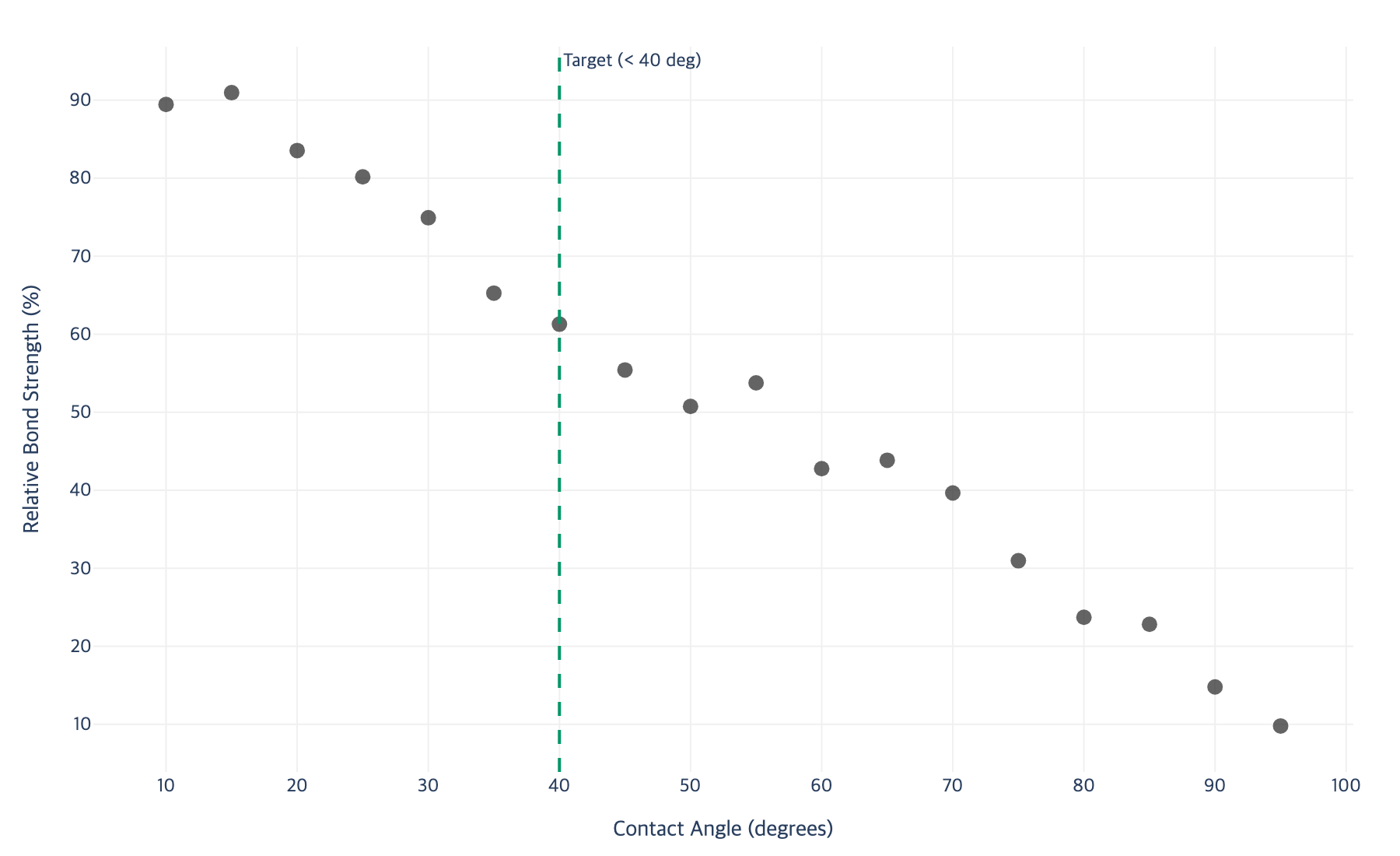
Contact angle measurement provides a rapid, non-destructive method to verify that surface preparation has achieved the required surface energy level. It answers the question that no visual inspection can: is the surface energy high enough for the adhesive to wet and bond effectively?
Figure 2. Contact Angle vs Bond Strength Correlation
The Science of Contact Angle
When a liquid droplet is placed on a solid surface, it forms a characteristic angle at the three-phase contact line (where solid, liquid, and gas meet). This angle, measured through the liquid, is the contact angle. The relationship between contact angle and surface energy is described by Young's equation: the contact angle is determined by the balance of interfacial tensions at the solid-liquid, solid-gas, and liquid-gas interfaces.
A low contact angle (the droplet spreads flat) indicates that the solid surface energy is significantly higher than the liquid surface tension, and the surface is easily wetted. A high contact angle (the droplet beads up) indicates the opposite. At a contact angle of zero degrees, the liquid spreads completely, which is the ideal condition for adhesive bonding. At 90 degrees, wetting is marginal. Above 90 degrees, the surface is hydrophobic and will not be adequately wetted by the adhesive.
For water (surface tension 72.8 mN/m at 20 degrees Celsius), a contact angle below 30 degrees corresponds to a surface energy above approximately 65 to 70 mJ/m2. A contact angle of 60 to 70 degrees corresponds to approximately 35 to 40 mJ/m2, which is the critical threshold range for many structural adhesive applications. A contact angle above 90 degrees indicates a surface energy below approximately 30 mJ/m2, which is insufficient for most adhesives.
The interpretation is straightforward for production personnel: lower contact angle means better prepared surface. But the specific threshold depends on the adhesive being used. The following table provides practical target values.
Target Values by Application
Substrate | Adhesive | Target Contact Angle (water) | Surface Energy Equivalent | Action if Exceeded |
|---|---|---|---|---|
Steel (clean) | Epoxy | Below 40 degrees | Above ~50 mJ/m2 | Re-clean, check for contamination source |
Aluminum (etched) | Structural epoxy | Below 30 degrees | Above ~65 mJ/m2 | Re-treat, verify etch concentration and time |
Aluminum (anodized) | Structural epoxy | Below 20 degrees | Above ~70 mJ/m2 | Re-anodize, check bath parameters |
Plastic (plasma treated) | MMA | Below 50 degrees | Above ~40 mJ/m2 | Re-treat, check plasma parameters |
Plastic (corona treated) | Laminating adhesive | Below 55 degrees | Above ~38 mJ/m2 | Re-treat, increase watt density or reduce line speed |
Composite (peel ply) | Epoxy | Below 35 degrees | Above ~55 mJ/m2 | Re-abrade, verify complete peel ply removal |
Polypropylene (flame treated) | Structural adhesive | Below 55 degrees | Above ~38 mJ/m2 | Re-treat, check flame distance and dwell time |
Measurement Methods: From Lab to Production Floor
Contact angle can be measured at several levels of precision, and the appropriate method depends on whether the measurement is being used for process development (laboratory) or production verification (in-line).
ASTM D5946 is the standard test method for contact angle measurement on corona-treated polymer films. It specifies a controlled environment of 23 plus or minus 2 degrees Celsius and 50 plus or minus 10 percent relative humidity, with specimen dimensions of at least 25 mm by 300 mm. This method is appropriate for laboratory validation and establishing baseline specifications, but it is too slow and prescriptive for in-line production use.
For production verification, portable contact angle goniometers are available that deliver a measurement in under 30 seconds. The operator places a controlled water droplet (typically 2 to 5 microliters from a precision syringe) on the prepared surface, and the instrument captures an image and calculates the contact angle automatically. Modern instruments achieve repeatability of plus or minus 1 to 2 degrees, which is sufficient for pass/fail quality decisions.
The simplest and oldest method is the water break test: flood the surface with water and observe whether the water sheets (passes) or beads up (fails). This qualitative test provides no numerical value but is useful as a gross screening method, particularly for metal substrates where any beading indicates residual contamination. It costs nothing and can be performed by any operator. For polymer substrates where the target surface energy is closer to the wetting threshold, the dyne pen (test ink) method provides a semi-quantitative alternative. Sets of test inks with known surface tensions (typically available in 2 dyne/cm increments from 30 to 56 dyne/cm) are drawn across the surface. If the ink wets the surface and remains as a film, the surface energy exceeds the ink value. If the ink retracts into droplets, the surface energy is below the ink value.
VIII. Integrating Surface Quality Checks into Production Lines
Knowing how to measure surface quality is only valuable if the measurement is integrated into the production workflow at a point where it can prevent defective bonds before they occur. The placement, frequency, and response protocol for surface quality checks determine whether they function as genuine quality gates or merely as documentation exercises.
Where to Place the Quality Check
The contact angle or dyne level measurement must occur after the final surface preparation step and before adhesive application. This seems obvious, but in practice, the time gap between preparation and measurement matters. If parts are prepared in one area, transported to a staging area, and then moved to an assembly line, the measurement should ideally occur at the assembly station, not at the preparation station. This captures any contamination introduced during handling and transport, and for plasma-treated plastics, any surface energy decay that has occurred during the elapsed time.
For corona-treated films in web-based processes (printing, laminating, coating), in-line non-contact measurement systems are available that continuously monitor surface energy as the web passes through the treatment station. These systems use controlled air-droplet deposition and high-speed cameras to measure contact angles at production speeds, providing real-time feedback that can be used to automatically adjust corona treater power.
For discrete-part manufacturing (automotive, electronics, appliance assembly), the quality check is typically a sampling-based manual measurement. The sampling frequency depends on the process stability. During initial production validation, 100 percent measurement may be warranted. Once the process is demonstrated stable, sampling rates of 1 in 10 or 1 in 25 parts, plus first-article and last-article checks per shift, are common.
Establishing Pass/Fail Criteria
The pass/fail threshold should be set with a margin of safety below the minimum acceptable contact angle. If laboratory testing determines that bond strength drops below specification at a water contact angle of 60 degrees, the production pass/fail limit should be set at 50 degrees, providing a 10-degree margin that accounts for measurement variability, part-to-part variation, and the fact that a single spot measurement may not represent the entire bonding area.
The margin of safety should be validated through a process capability study: measure contact angles on a statistically significant sample of production parts, calculate the process mean and standard deviation, and set the pass/fail limit such that the lower specification limit of the contact angle distribution (mean minus 3 sigma) still exceeds the minimum contact angle required for adequate bond strength.
Response Protocol When Parts Fail
A quality gate without a defined response protocol creates confusion on the production floor. The response to a failed contact angle measurement should be documented and available to operators, including the specific re-treatment steps, the maximum number of re-treatments allowed, and the disposition path for parts that cannot be brought into specification.
For metal substrates, a failed contact angle check usually indicates contamination reintroduction. The response is to re-clean (identify the contamination source) and re-measure. For plasma-treated plastics, a failed check may indicate treatment decay (too much time elapsed) or insufficient initial treatment. The response is to re-treat and re-measure. For chemically etched parts, a failed check may indicate an out-of-specification etch bath (concentration drift, temperature deviation, exhausted chemistry) and requires a process investigation rather than simply re-treating individual parts.
Tracking contact angle measurements over time creates a process control dataset that reveals trends before they cause failures. A gradual upward drift in contact angles on plasma-treated parts may indicate a degrading electrode or a change in the polymer formulation from the supplier, either of which can be addressed proactively before bond failures occur in the field.
IX. Key Takeaway
Surface preparation is the most controllable variable affecting adhesive bond strength; optimizing it for each application prevents both under-preparation and over-preparation
Surface preparation works by modifying three properties: cleanliness (contaminant removal), surface energy (wettability), and topography (roughness and mechanical interlocking)
Match preparation intensity to the specific substrate-adhesive combination using the optimization matrix rather than applying a one-size-fits-all method
Chemical etching protocols must be matched to the specific metal alloy; FPL, P2, and phosphoric acid anodize each produce different oxide structures with different durability characteristics
Plasma and corona treatment of polymers provides dramatic surface energy increases, but the effect decays over time; bonding must occur within the validated shelf life or parts must be re-treated
Contact angle measurement provides a rapid in-line quality verification that surface preparation has achieved adequate surface energy before adhesive application
Low surface energy plastics (polyolefins) require energy-increasing treatments (plasma, flame, primer) that no amount of cleaning or abrasion can replace
Integrate surface quality checks at the point of assembly, not at the point of preparation, to capture contamination and treatment decay that occurs during handling and transport
The number of variables in surface preparation, from substrate alloy to contaminant type, from treatment chemistry to shelf life constraints, from adhesive wetting requirements to production rate targets, creates a decision space that grows exponentially with each additional parameter. Engineers currently navigate this space using tribal knowledge, supplier recommendations, and iterative trial-and-error testing. Lubinpla's AI platform compresses this decision cycle by evaluating the substrate material, adhesive chemistry, contamination type, production constraints, and environmental exposure requirements simultaneously, then recommending the minimum effective surface preparation protocol with validated process windows. Instead of over-specifying preparation "just to be safe" or under-specifying and discovering failures in the field, the platform identifies the precise point where preparation effort meets bonding requirement, and continuously refines that recommendation as production data accumulates.
X. References
[1] NIST, "Surface Engineering of Aluminum and Aluminum Alloys", 2018. https://materialsdata.nist.gov/bitstream/handle/11115/222/Surface%20Engineering%20of%20Al.pdf
[2] PMC, "Strength in Adhesion: Multi-Mechanics Review", 2024. https://pmc.ncbi.nlm.nih.gov/articles/PMC12526568/
[3] MDPI Polymers, "Temperature and Humidity Effects on Adhesive Properties", 2023. https://www.mdpi.com/2073-4360/15/2/339
[4] ResearchGate, "Effect of Surface Preparation on Adhesive Bond Strength", 2023. https://www.researchgate.net/publication/216138498
[5] Products Finishing, "Surface Treatment for Bonding", 2024. https://www.pfonline.com/topics/clean
[6] Henkel, "Surface Preparation Guide for Structural Bonding", 2024. https://www.henkel-adhesives.com/
[7] 3M, "Surface Preparation for Adhesive Bonding", 2024. https://www.3m.com/
[8] ASTM D5946, "Standard Test Method for Corona-Treated Polymer Films Using Water Contact Angle Measurements". https://www.astm.org/d5946-17.html
[9] TWI, "Typical Values of Surface Energy for Materials and Adhesives". https://www.twi-global.com/technical-knowledge/faqs/faq-what-are-the-typical-values-of-surface-energy-for-materials-and-adhesives
[10] ScienceDirect, "Plasma Treatment Effects on Polymer Adhesion", 2024. https://www.sciencedirect.com/
[11] Enercon Industries, "Corona Treatment: An Overview". https://www.enerconind.com/web-treating/wp-content/uploads/sites/3/2023/10/Enercon-corona-treating-overview.pdf
[12] MDPI Polymers, "Aging of Plasma-Activated Polyethylene and Hydrophobic Recovery", 2023. https://www.mdpi.com/2073-4360/15/24/4668
[13] Permabond, "Surface Preparation Technical Guide", 2024. https://www.permabond.com/
[14] Huntsman, "Araldite Application and Surface Preparation Guide", 2024. https://www.huntsman.com/
[15] Technibond, "Surface Energy Chart for Metals and Polymers". https://www.technibond.co.uk/wp-content/uploads/2019/04/surface-energy-chart.pdf
Powered by Lubinpla
Discover how technical teams solve complex challenges faster with AI.