Selecting the Right Cleaning Chemistry for Multi-Metal Assembly Lines
Summary: Production lines processing multiple metal types face a fundamental chemistry challenge: the cleaning agent must remove contaminants from all substrates without causing corrosion or surface damage to any. This article presents a selection framework based on pH tolerance ranges, galvanic corrosion risks, chelating agent selection, rinse water quality, and inhibitor compatibility for mixed-metal environments.
Table of Contents
I. The Multi-Metal Cleaning Challenge
II. pH Tolerance Ranges by Metal Type
III. Finding the Universal pH Window
IV. Galvanic Corrosion Risks in Mixed-Metal Cleaning Baths
V. Chelating Agent Selection
VI. Inhibitor Selection
VII. Rinse Water Quality
VIII. Condition Matrix
IX. Real-World Scenarios
X. Key Takeaway
XI. References
I. The Multi-Metal Cleaning Challenge
Modern manufacturing assembly lines frequently process components made from different metals on the same cleaning line. An automotive assembly may include carbon steel structural parts, aluminum heat sinks, copper electrical connectors, and zinc-plated fasteners, all requiring cleaning before assembly. A single cleaning chemistry must handle all of these substrates without damaging any.
The challenge is not theoretical. Aerospace manufacturers clean subassemblies containing titanium, aluminum, copper, and steel in the same aqueous system. Automotive Tier 1 suppliers process mixed-metal brake assemblies and electrical connectors combining copper terminals with zinc-plated housings. In each case, the cleaning chemistry must be universally compatible.
Why Single-Metal Optimization Fails
The common mistake is optimizing for the most difficult contaminant or most common substrate without verifying compatibility with all metals. An alkaline cleaner at pH 11 for steel degreasing will etch aluminum within minutes. An acidic cleaner that brightens copper will corrode zinc plating. The cleaning chemistry must operate within the overlap zone where all metals are safe.
The Consequence of Getting It Wrong
Multi-metal cleaning failures are costly because they often affect the least obvious substrate. Engineers confirm that the primary material (usually steel) is cleaned effectively and miss the fact that aluminum is developing micro-etching or zinc plating is slowly dissolving. These defects manifest later as adhesion failures, corrosion, or electrical resistance changes in the assembled product.
In the automotive industry, a cleaning-related corrosion defect discovered after assembly can cost 10 to 100 times more to remediate than one caught at the cleaning stage. The ASTM B117 salt spray test (continuous 5% salt fog at 35 degrees C) is commonly used to validate cleaning and pretreatment, with automotive OEMs typically requiring 500 to 1,000 hours of resistance. Any contamination from incompatible chemistry will cause premature failure.
II. pH Tolerance Ranges by Metal Type
Each metal has a characteristic pH range within which its protective oxide layer remains stable. Outside this range, the oxide dissolves and the base metal becomes vulnerable to chemical attack.
Figure 1. pH Tolerance Ranges and Universal Cleaning Window
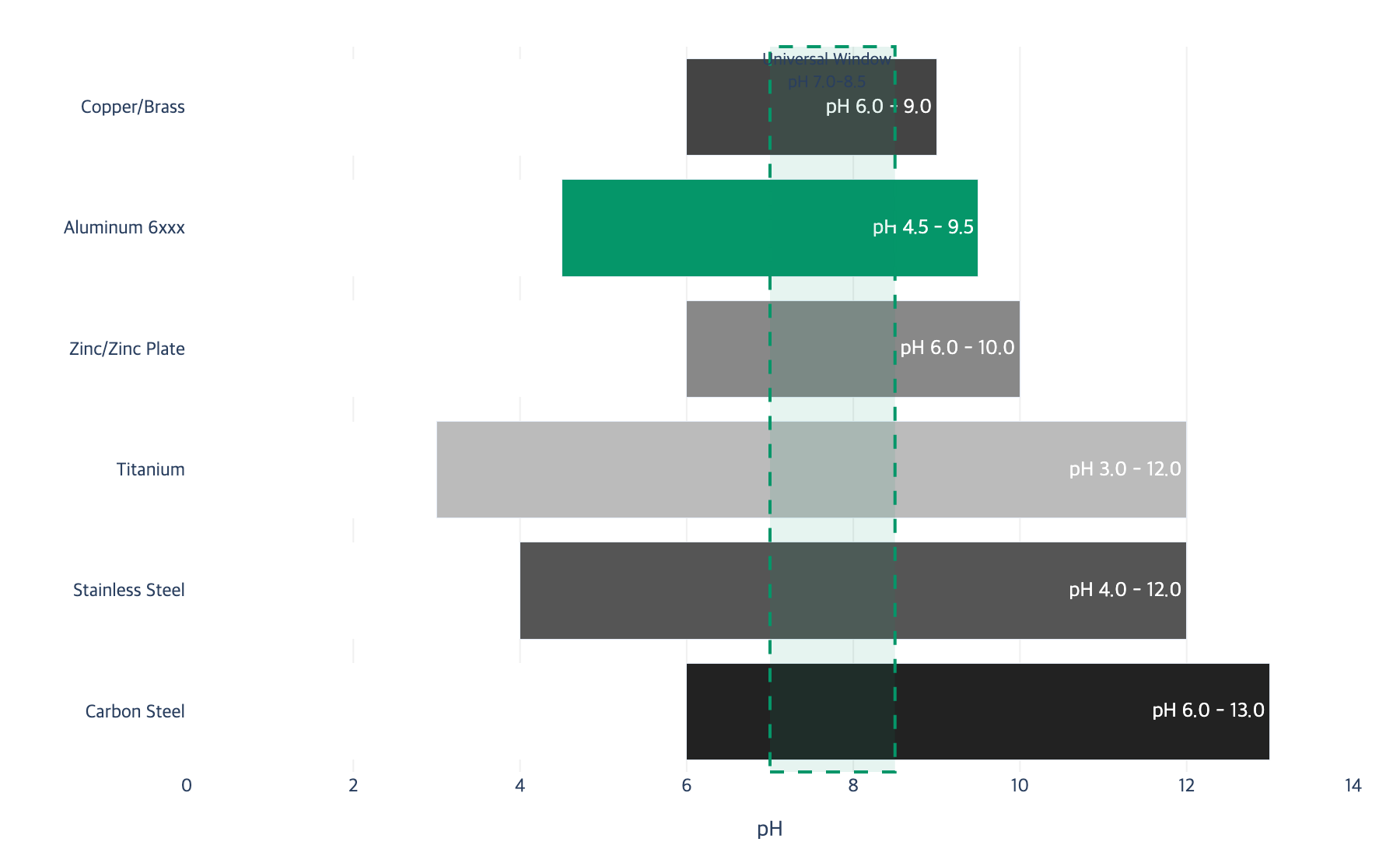
Figure 1b. Safe pH Cleaning Ranges by Metal Type
Metal | Minimum Safe pH | Maximum Safe pH | Primary Risk Below | Primary Risk Above |
|---|---|---|---|---|
Carbon steel | 6.0 | 13.0 | Acid corrosion | Minimal (strong alkali safe) |
Stainless steel | 4.0 | 12.0 | Pitting (Cl- sensitive) | Caustic stress corrosion |
Aluminum (6xxx) | 4.5 | 9.5 | Acid etching | Alkaline dissolution |
Copper / Brass | 6.0 | 9.0 | Acid tarnishing | Ammonia complex corrosion |
Zinc / Zinc plate | 6.0 | 10.0 | Rapid acid dissolution | Alkaline dissolution |
Titanium | 3.0 | 12.0 | Minimal | Minimal |
The key insight: aluminum has the narrowest high-pH tolerance (maximum 9.5), copper the narrowest overall range (6.0 to 9.0), and steel is the most tolerant. With all four metals present, the universal safe window is approximately pH 6.5 to 9.0.
Aluminum: The Most pH-Sensitive Substrate
Aluminum is amphoteric, dissolving in both strong acids and strong bases. The protective oxide layer (Al2O3) is stable only from pH 4.5 to 9.5. Above 9.5, it dissolves as soluble aluminate ions; below 4.5, as aluminum ions directly. The 6xxx series alloys (6061, 6063) common in automotive and aerospace are particularly sensitive to alkaline attack because magnesium-silicon precipitates create localized galvanic cells at grain boundaries.
In practice, aluminum cleaning above pH 9.0 requires silicate-based inhibitors, and exposure time must be carefully controlled. An uninhibited alkaline cleaner at pH 10 can remove 0.5 to 1.0 micrometers of surface per minute, enough to cause visible etching on precision parts within a single cycle.
Copper and Brass: Tarnish and Complex Formation Risks
Copper and its alloys are vulnerable to acid tarnishing below pH 6.0 and alkaline complex corrosion above pH 9.0. The alkaline risk is acute with ammonia or amine-based compounds, which form soluble complexes (tetraamminecopper(II)) that dissolve the metal. Many general-purpose cleaners contain amine-based inhibitors safe for steel but destructive to copper. Any chemistry used with copper must be verified ammonia-free and amine-free.
Zinc and Zinc Plating: The Sacrificial Layer at Risk
Zinc plating serves as a sacrificial anode to protect the underlying steel, which means the zinc layer is inherently more reactive. Zinc dissolves readily below pH 6.0 and above pH 12.5, and even in the mildly alkaline range (pH 10 to 12), dissolution is slow but measurable. Since zinc plating thickness is typically 5 to 25 micrometers, even modest dissolution rates of 0.1 to 0.2 micrometers per cleaning cycle become significant over repeated exposures. A part passing through the cleaning line 10 to 20 times can lose a meaningful fraction of its zinc protection.
III. Finding the Universal pH Window
For the most common multi-metal combination (steel + aluminum + copper + zinc), the universal pH window is 6.5 to 9.0. This eliminates the highest-performance alkaline cleaners (pH 10 to 13) standard for steel degreasing. The cleaning chemistry must compensate through more effective surfactant systems, higher operating temperatures, mechanical agitation, or longer dwell times. Multi-metal compatibility requires sacrificing some cleaning aggressiveness for substrate safety.
The Role of Surfactant Systems
In the mild alkaline range, cleaning performance depends heavily on the surfactant package. Nonionic surfactants (ethoxylated alcohols, alkyl polyglucosides) are preferred for multi-metal applications: they work across a broad pH range, do not precipitate with dissolved metal ions, and have low foaming suitable for spray applications. Anionic surfactants (sulfonates, phosphate esters) provide stronger oil emulsification but may precipitate in hard water or interact with dissolved copper or zinc ions.
Alkyl polyglucosides (APGs) are particularly well-suited for multi-metal cleaning. These sugar-based nonionic surfactants are effective degreasers at pH 7 to 9, biodegradable, and do not interact with dissolved metal ions. Their cloud point is typically above 80 degrees C, well above the 45 to 55 degrees C operating range of multi-metal baths.
Temperature Compensation Strategy
When pH is constrained by multi-metal compatibility, temperature becomes the primary process lever. Every 10 degrees C increase roughly doubles the cleaning rate for most organic soils. However, copper and brass may develop accelerated oxidation above 60 degrees C in alkaline solutions, and zinc dissolution rates increase with temperature. The practical range for four-metal systems is 45 to 55 degrees C.
IV. Galvanic Corrosion Risks in Mixed-Metal Cleaning Baths
When dissimilar metals are immersed in the same conductive cleaning solution, they form a galvanic cell. The more anodic metal corrodes preferentially, with the rate depending on the potential difference between the metals, solution conductivity, and the area ratio of anode to cathode.
The Galvanic Series and Cleaning Bath Conductivity
In the galvanic series, zinc is the most anodic of the four common manufacturing metals, followed by aluminum, steel, and copper (most cathodic). The potential difference between zinc and copper is approximately 0.8 to 1.0 volts, large enough to drive significant galvanic corrosion. Since a typical alkaline cleaning bath has a conductivity of 5,000 to 20,000 microsiemens per centimeter, zinc-plated parts and copper connectors immersed in the same bath, or even processed sequentially without adequate rinsing, face real galvanic corrosion risk.
Area Ratio Effects
The area ratio between the anodic (corroding) metal and the cathodic (protected) metal has a dramatic effect on corrosion rate. When a small zinc-plated fastener is near a large copper component in the cleaning bath, the unfavorable area ratio (small anode, large cathode) concentrates all the corrosion current on the small zinc surface. A cleaning line processing large steel panels alongside small zinc-plated fasteners may see accelerated zinc loss even if the cleaning chemistry itself is within the safe pH range. Additionally, copper ions leached from copper or brass components can plate out on zinc surfaces through cementation (a displacement reaction), further accelerating localized corrosion.
Mitigation Strategies
Batch segregation eliminates the galvanic couple entirely. Spray cleaning is preferable to immersion because the thin liquid film has higher resistance, reducing galvanic current. Reducing builder concentrations lowers bath conductivity and slows corrosion. Monitoring dissolved copper ions is essential: levels above 5 ppm can plate out on zinc and aluminum through cementation, creating corrosion cells even after parts leave the bath.
V. Chelating Agent Selection for Multi-Metal Environments
Chelating agents serve two functions in multi-metal cleaning: preventing hard water minerals (calcium, magnesium) from interfering with cleaning performance, and binding dissolved metal ions to prevent redeposition on part surfaces. However, the same strong metal binding that makes a chelating agent useful can also make it aggressive toward the substrates being cleaned.
EDTA: The Standard Chelating Agent
Ethylenediaminetetraacetic acid (EDTA) is the most widely used chelating agent in industrial cleaning, forming stable complexes with virtually all divalent and trivalent metal ions including calcium, magnesium, iron, copper, and zinc. In use since the late 1940s, it remains the benchmark for chelation performance across a broad pH range.
However, EDTA's strong binding affinity creates a specific risk in multi-metal cleaning. In alkaline solutions (pH 8 to 9), EDTA can accelerate zinc dissolution by complexing zinc ions as they leave the surface, shifting the equilibrium toward continued metal loss. At typical cleaning concentrations (0.1 to 0.5%), this effect is measurable on zinc-plated surfaces, particularly at elevated temperatures.
NTA: A Moderate Alternative
Nitrilotriacetic acid (NTA) has lower stability constants than EDTA for most metal ions. This makes it less effective at preventing hard water interference in heavily contaminated baths, but also less aggressive toward zinc and aluminum surfaces. NTA is a reasonable choice for multi-metal systems where source water quality is good (total hardness below 150 ppm as CaCO3) and zinc substrate protection is a priority.
Gluconic Acid: The Multi-Metal-Safe Option
Gluconic acid and its sodium salt (sodium gluconate) are remarkably noncorrosive to aluminum and form water-soluble complexes with calcium, iron, and copper. Chelation strength is lower than EDTA or NTA, but adequate for most cleaning applications with the critical advantage of being gentle on all common manufacturing metals including zinc. Sodium gluconate is also biodegradable, addressing the environmental concerns associated with EDTA, which persists in wastewater due to low biodegradability.
Citric Acid: Use With Caution
Citric acid effectively chelates iron, calcium, and other metal ions, but is not recommended for direct contact with aluminum or copper at low pH. Above 2 to 3% concentration in unbuffered solution, it can etch aluminum and tarnish copper. However, buffered to pH 7 to 8 at concentrations below 1%, citric acid can serve as an effective chelating agent in multi-metal systems.
Chelating Agent Selection Summary
Chelating Agent | Hard Water Control | Zinc Safety | Aluminum Safety | Copper Safety | Biodegradability |
|---|---|---|---|---|---|
EDTA (0.1-0.5%) | Excellent | Fair (monitor) | Good | Good | Poor |
NTA (0.1-0.5%) | Good | Good | Good | Good | Moderate |
Gluconic acid (0.5-2%) | Good | Excellent | Excellent | Good | Excellent |
Citric acid (buffered, pH 7-8) | Good | Good | Fair (monitor) | Fair (monitor) | Excellent |
VI. Inhibitor Selection for Mixed-Metal Protection
Even within the safe pH window, corrosion inhibitors provide an additional safety margin for the most sensitive metals.
Multi-Metal Inhibitor Packages
Effective multi-metal inhibitor packages combine components that protect different metals through different mechanisms. Sodium silicate (0.5 to 2% as SiO2) provides barrier protection for aluminum by forming a thin film on the oxide surface, most effective at pH 8 to 9.5, reducing alkaline dissolution by an order of magnitude.
Benzotriazole (BTA) at 50 to 200 ppm provides film-forming protection for copper and brass by creating a coordination complex that bonds to copper atoms through its nitrogen atoms, forming an insoluble polymeric barrier.
Sodium nitrite provides passivation protection for steel by reinforcing the passive oxide layer at concentrations of 500 to 2,000 ppm. Zinc-safe formulations avoid ammonia-based compounds that attack zinc plating. This restriction eliminates common amine-based inhibitors such as morpholine, cyclohexylamine, and ethanolamine, which form soluble zinc-amine complexes that dissolve the zinc plating.
Inhibitor Compatibility Considerations
Not all inhibitors work well together. Silicate inhibitors precipitate below pH 8, so the full package (silicate + BTA + nitrite) is most effective at pH 8.0 to 8.5. BTA can be consumed by oxidizing agents in the formulation, requiring more frequent replenishment in peroxide-containing cleaners. Sodium nitrite decomposes below pH 5 and can form regulated nitrosamines with secondary amines. The inhibitor package must be tested as a complete system under actual process conditions, because interactions between components can produce unexpected results.
VII. Rinse Water Quality Requirements
Inadequate rinsing leaves chemical residues that cause corrosion, staining, or adhesion failures in subsequent operations. For multi-metal assemblies, rinse water quality is driven by the most sensitive substrate in the mix.
TDS and Conductivity Targets
Total dissolved solids (TDS) directly affect rinse quality. Source water below 300 ppm TDS is acceptable for intermediate stages; final rinse stages before coating or bonding require DI or RO water below 20 ppm TDS for spot-free results. Conductivity, a more practical real-time measurement, should target:
Rinse Stage | Conductivity Target | TDS Equivalent | Application |
|---|---|---|---|
First (drag-out) rinse | Below 500 microsiemens/cm | Below 300 ppm | Bulk chemical removal |
Intermediate rinse | Below 50 microsiemens/cm | Below 30 ppm | Residue reduction |
Final rinse (general) | Below 5 microsiemens/cm | Below 3 ppm | Spot-free, coating-ready |
Final rinse (precision) | Below 1 microsiemens/cm | Below 0.5 ppm | Aerospace, electronics |
For multi-metal assemblies, final rinse quality is particularly important because dissolved copper ions from the cleaning bath, even at 1 to 2 ppm, can plate out on aluminum or zinc surfaces through cementation, creating dark spots and initiating localized corrosion.
Rinse Water pH Considerations
Deionized water equilibrates with atmospheric CO2 to reach pH 5.5 to 6.0, which can tarnish copper and accelerate zinc dissolution. Use a controlled-pH final rinse (buffered to pH 7.0 to 7.5 with sodium bicarbonate) or minimize time between final rinse and drying.
Rinse System Design
Counter-current cascade rinse systems are the industry standard. For mixed-metal assemblies, a minimum of three rinse stages provides a dilution ratio of 1,000:1 to 10,000:1, sufficient to reduce cleaner residues to non-harmful levels for all substrates.
VIII. Condition Matrix: Metal Combination to Chemistry
The following matrix provides starting-point recommendations for common multi-metal combinations encountered in manufacturing.
Figure 2. Metal Combination Risk and pH Window Width
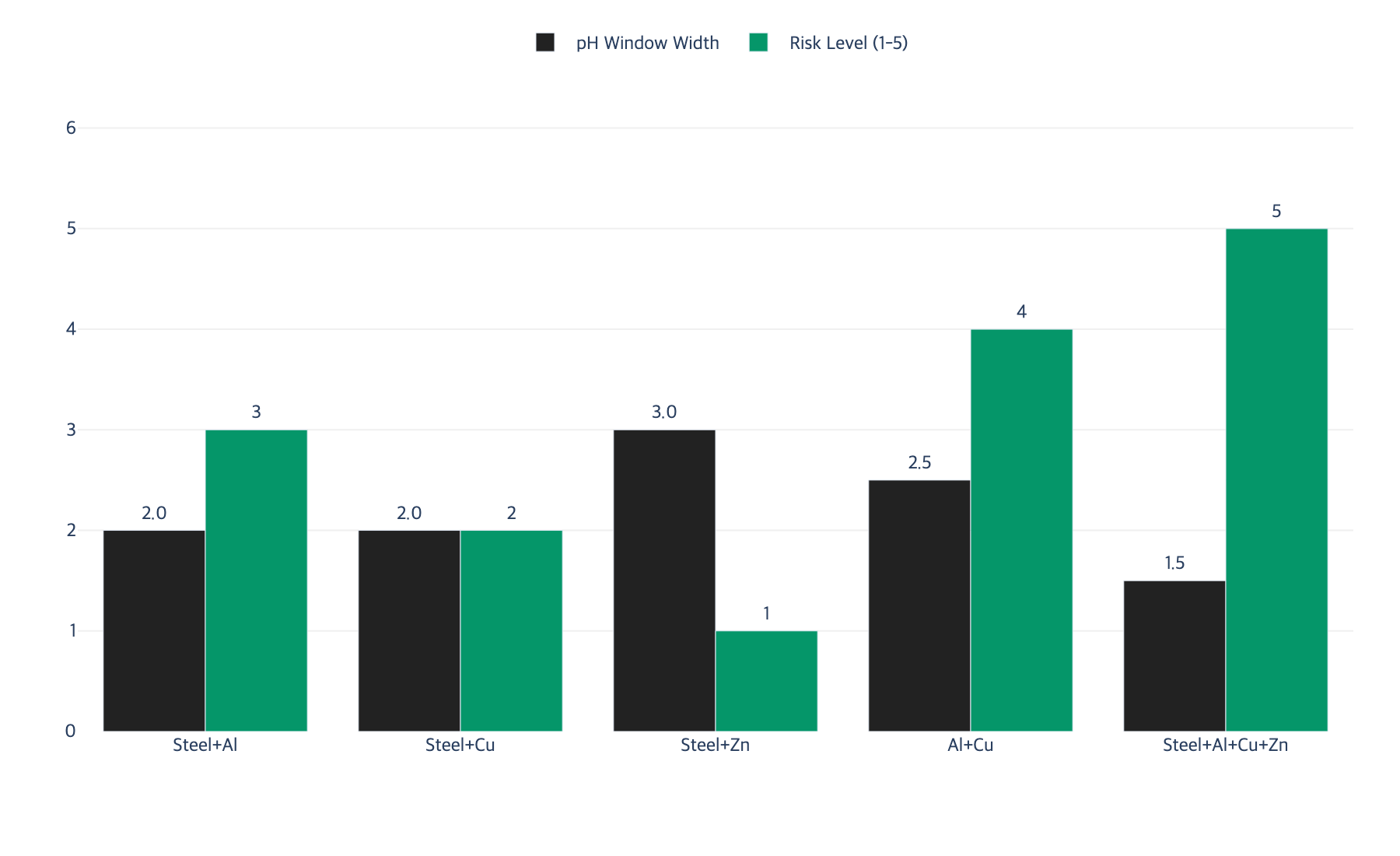
Figure 2b. Multi-Metal Cleaning Chemistry Selection Matrix
Metal Combination | pH Range | Surfactant Type | Inhibitors | Chelating Agent | Temperature | Notes |
|---|---|---|---|---|---|---|
Steel + Aluminum | 7.5-9.5 | Nonionic blend | Silicate + nitrite | Gluconate or NTA | 50-55C | Monitor Al dissolution |
Steel + Copper | 7.0-9.0 | Nonionic | BTA + nitrite | EDTA (low conc.) | 50-60C | No ammonia compounds |
Steel + Zinc plate | 7.0-10.0 | Nonionic or mild anionic | Nitrite | Gluconate | 45-55C | No strong alkali |
Aluminum + Copper | 6.5-9.0 | Nonionic APG blend | Silicate + BTA | Gluconate | 45-50C | Narrowest safe window |
Steel + Al + Cu + Zn | 7.0-8.5 | Nonionic APG | Silicate + BTA + nitrite | Gluconate + trace EDTA | 45-50C | Full multi-metal package |
The four-metal scenario demands precise pH control and regular bath monitoring to prevent drift outside the narrow 7.0 to 8.5 window.
Validation Protocol
Before committing to a cleaning chemistry for a multi-metal line, conduct a coupon test program. Prepare test coupons of each metal (typically 25 x 75 mm), weigh to 0.1 mg precision, and immerse them at planned operating conditions. Evaluate at the planned cycle time and at 3x the planned cycle time for weight loss, discoloration, and surface roughness change. For zinc-plated coupons, measure plating thickness before and after using XRF or magnetic gauges. Surface energy measurement (contact angle goniometry) confirms adequate contaminant removal: a water contact angle below 10 degrees indicates thorough degreasing.
Accept criteria: weight loss below 0.5 mg/cm2 per cycle, no visible discoloration at 10x magnification, and zinc thickness loss below 0.2 micrometers per cycle.
IX. Real-World Production Scenarios
The principles above apply directly in manufacturing environments where multi-metal cleaning is a daily reality.
Automotive Mixed-Metal Assemblies
Lightweighting has driven aluminum and magnesium adoption alongside steel and zinc-plated fasteners, making automotive manufacturing inherently multi-metal.
Engine components: Aluminum cylinder heads with copper alloy valve guides, steel bolts, and zinc-plated studs require simultaneous cleaning of all four metals. The system operates at pH 8.0 to 8.5 with nonionic APG surfactants, sodium gluconate chelating agent, and a full inhibitor package at 50 degrees C.
Brake assemblies: Cast iron rotors, aluminum calipers, steel hardware, and copper-alloy brake lines require ultrasonic immersion at 40 kHz with mild alkaline chemistry (pH 8.0) to clean casting residue from complex caliper passages.
Electrical connectors: Copper terminals on zinc-plated steel housings demand low-residue cleaning followed by DI water rinsing below 5 microsiemens/cm to prevent galvanic corrosion in service.
Aerospace Mixed-Metal Subassemblies
Aerospace cleaning is governed by AMS 1550, AMS 1551, and OEM specifications. Contaminants left on parts can create friction that generates heat, potentially causing combustion in oxygen-rich systems.
Wing structures: Aluminum skins (2024-T3, 7075-T6) fastened to titanium and steel with zinc-nickel-plated fasteners require cleaning at pH 8.0 to 9.0 with strict chloride control (below 25 ppm) to prevent stress corrosion cracking.
Turbine components: Nickel superalloy blades, titanium discs, steel shafts, and copper bearings require pH 7.5 to 8.5 cleaning with final rinse below 1 microsiemens/cm, validated by wipe tests for hydrocarbon residue below 1 mg/m2.
Electronics and Electrical Equipment Manufacturing
Power electronics assemblies combine copper bus bars, aluminum heat sinks, steel chassis components, and solder alloys on a single assembly. The requirement is to remove flux residues (typically acidic, pH 2 to 4) without attacking any substrate. Cleaning chemistry for these assemblies uses a near-neutral (pH 7.0 to 8.0) saponifier formulation that converts rosin flux residues into water-soluble soaps, followed by a DI water rinse cascade to below 1 microsiemens/cm conductivity.
X. Key Takeaway
The universal safe pH window for multi-metal cleaning (steel + aluminum + copper + zinc) is pH 7.0 to 8.5, requiring compensation through surfactant systems and process optimization
Nonionic surfactants, particularly alkyl polyglucosides, are preferred due to broad pH compatibility and minimal interaction with dissolved metal ions
Galvanic corrosion in the cleaning bath is a real risk when dissimilar metals share conductive solution. Batch segregation, spray cleaning, and copper ion monitoring are effective countermeasures
Sodium gluconate offers the best multi-metal chelating agent safety profile; use EDTA at reduced concentrations when zinc is present
Combine substrate-specific inhibitors: silicate for aluminum, BTA for copper, nitrite for steel, with no ammonia compounds when zinc is present
Target rinse water below 5 microsiemens/cm for general applications, below 1 microsiemens/cm for aerospace and electronics
Validate chemistry on all metals through coupon testing at planned and extended exposure times
Monitor bath pH, inhibitor concentration, metal ion loading, and conductivity continuously
The challenge with multi-metal cleaning is not selecting the right starting chemistry. The real difficulty is maintaining optimal conditions over time as the bath accumulates dissolved metals, depletes inhibitors, and drifts in pH. Manual monitoring catches problems after they occur.
What if every bath parameter, every metal ion concentration, and every inhibitor level were tracked continuously and cross-referenced against the electrochemical compatibility requirements of every substrate in your process, in real time, flagging deviations before they reach the damage threshold? That is what AI-driven cleaning chemistry management makes possible: predicting compatibility issues before they become defects, recommending corrective actions specific to your metal combination, and optimizing the balance between cleaning performance and substrate protection across every bath cycle. When every cleaning cycle is a balancing act across four or more metal types with zero margin for error, the question is whether you can afford not to.
XI. References
[1] NIST, "Surface Engineering of Aluminum and Aluminum Alloys", 2018. https://materialsdata.nist.gov/bitstream/handle/11115/222/Surface%20Engineering%20of%20Al.pdf
[2] Products Finishing, "Aluminum Surface Finishing Corrosion Causes", 2024. https://www.pfonline.com/articles/aluminum-surface-finishing-corrosion-causes-and-troubleshooting
[3] Better Engineering, "Solvent vs. Aqueous Cleaners Explained", 2024. https://www.betterengineering.com/blog/solvent-vs-aqueous-cleaners/
[4] Best Technology Inc., "Aqueous Cleaning Solutions: Alkaline Cleaners", 2024. https://www.besttechnologyinc.com/bestsolv/aqueous-cleaning-chemistries/
[5] Arrow Chemical, "The Ultimate Guide to Industrial Cleaners", 2024. https://www.arrowchem.com/the-ultimate-guide-to-industrial-aqueous-and-solvent-cleaners-degreasers/
[6] Aluminium Guide, "Aluminium Alkaline Etching Bath Maintenance", 2024. https://aluminium-guide.com/alkaline-etching-aluminium/
[7] Wikipedia, "Galvanic Corrosion", 2024. https://en.wikipedia.org/wiki/Galvanic_corrosion
[8] Industrial Metal Service, "Galvanic Corrosion Chart", 2024. https://industrialmetalservice.com/metal-university/avoid-long-term-problems-with-our-galvanic-corrosion-chart/
[9] ASTM International, "ASTM B117 - Standard Practice for Operating Salt Spray (Fog) Apparatus". https://www.astm.org/b0117-19.html
[10] PMC/NIH, "Application of New Generation Complexing Agents in Removal of Heavy Metal Ions", 2013. https://pmc.ncbi.nlm.nih.gov/articles/PMC3720993/
[11] Best Technology Inc., "Differences Between RO and DI Water for Parts Cleaning", 2024. https://www.besttechnologyinc.com/ultrasonic-cleaning-systems/difference-ro-di-water-parts-cleaning/
[12] Products Finishing, "Water Conductivity", 2024. https://www.pfonline.com/articles/water-conductivity
[13] Production Machining, "4 Considerations for Aerospace Component Cleaning", 2024. https://www.productionmachining.com/articles/4-considerations-for-aerospace-component-cleaning
Powered by Lubinpla
Discover how technical teams solve complex challenges faster with AI.