Plan Bench Trials for Unmet Requirements With Formulation Design
A Lubinpla Formulation Design task turns a customer requirement no catalog product meets into numeric targets, reviewed candidate formulations and a bench trial plan. It reads the project's conditions, your work logs and the raw material data sheets you upload. A person approves the task before it starts and approves the plan before it is filed for the laboratory.
When a formulation request reaches the laboratory as adjectives such as low foam or no corrosion, the chemist must turn them into numeric targets and work out again, at component level, why each catalog candidate failed.
Short-chain chlorinated paraffins, which can be used as an extreme pressure lubricant in metalworking fluids, are listed in Annex A of the Stockholm Convention, whose parties must take measures to eliminate their production and use (Stockholm Convention Secretariat, accessed 2026).
The US OSHA metalworking fluids manual advises users to avoid potentially carcinogenic components, naming chlorinated paraffins alongside nitrites and formaldehyde-releasing biocides (US OSHA, accessed 2026).
Lubinpla turns a requirement no catalog product meets into numeric targets, compares candidate formulations at component level using the raw material data sheets you upload, and sets the bench trial's success and stop criteria before the first run.
In Lubinpla, the approved trial plan is filed as an internal document every member of the organization can open, and the bench results are recorded and judged against the plan's criteria on the same customer project.
What happens when no catalog product meets a customer's requirement?
When no catalog product meets a customer's requirement, the request can reach the laboratory as a forwarded email with a few adjectives in it. Take Stanbury, a sample account that is adding a magnesium alloy machining line. Its process engineer asks for a water-miscible cutting fluid with no chlorinated additives, low foam at a sump temperature of 40°C and no corrosion on magnesium parts, with plant water at 400 ppm hardness (illustrative values from a sample account).
The technical sales engineer has already screened the catalog. None of nine candidates met every mandatory requirement: most held foam down, and most failed on magnesium corrosion protection. That verdict sits in a spreadsheet tab and a reply thread with the customer.
The formulation chemist who picks up the request reads "low foam" and "no corrosion" in words, not as values the laboratory can measure. Nobody wrote down which component in each catalog candidate caused the failure, so the chemist rebuilds that from the product sheets. Then come the questions by email: which raw materials are in stock, whether the corrosion inhibitor tolerates hard water, how many runs will settle it. Done this way, formulation design can take several weeks before the first bench trial.
Why does formulation design stall between sales and the laboratory?
Formulation design stalls between sales and the laboratory because the handover lacks three things: numeric targets, component-level reasons for failure and pass criteria agreed before the first run. Without numeric targets, the chemist guesses what "low foam" means to the customer, and the first round may test the wrong thing. Without component-level reasons, the team cannot tell whether the base fluid, the inhibitor package or the emulsifier needs to change. Without criteria fixed in advance, a borderline result becomes a debate, and a second round starts with no clear reason for what changed.
Regulation adds reformulation work from the other side. The Stockholm Convention Secretariat notes that short-chain chlorinated paraffins "can be used as a plasticizer in rubber, paints, adhesives, flame retardants for plastics as well as an extreme pressure lubricant in metal working fluids" and lists them in Annex A, where parties "must take measures to eliminate the production and use" of the listed chemicals, with specific exemptions only for parties that have registered for them (Stockholm Convention Secretariat, accessed 2026). Medium-chain chlorinated paraffins appear in Annex A as well. In the United States, the OSHA metalworking fluids manual advises users to avoid potentially carcinogenic components, chlorinated paraffins among them (US OSHA, accessed 2026). A chlorine-free requirement like Stanbury's, or a discontinued raw material, can send an established formulation back to the bench.
Why do general AI tools and spreadsheets fall short in formulation design over time?
General AI tools and spreadsheets help with formulation design at first and fall short as the rounds and records pile up. A general AI tool can draft a candidate list or a test matrix quickly from a pasted requirement, and a tidy spreadsheet tracks bench rounds well for one chemist on one project. Those are real gains.
The limits show up in the later rounds. The tool works on copies: the requirement, the failure reasons and the raw material sheets are pasted in, and the bench results it helps interpret never return to the customer's project, so the chat and the spreadsheet drift apart. A general model also answers from textbook chemistry, not from the raw materials your plant stocks, the limits on their technical data sheets or your laboratory's test methods.
Pasting in more documents does not close that gap. In a study of long inputs, Liu and colleagues found that model performance "significantly degrades when models must access relevant information in the middle of long contexts" (Liu et al., TACL 2024). The hard-water limit on page 30 of a pasted pile is the kind of detail put at risk.
In Lubinpla, the Formulation Design task reads the project's Conditions, the work logs and the raw material technical data sheets (TDS) and safety data sheets (SDS) in the Dataroom, and the bench results come back as work logs on the same project.
How do you run formulation design as a task in Lubinpla?
You run formulation design as a task by recording what the catalog could not do, asking for the task in AI Chat, approving it, and reviewing the plan its last step writes.
Record the requirement and why the candidates failed. On the account's Projects tab, open the line and check its Conditions, such as concentration, sump temperature and water hardness, with units. In a New conversation, type /worklog and write the requirements and the failure reasons. If you have the TDS and SDS of raw materials you can use, upload them to the Dataroom.
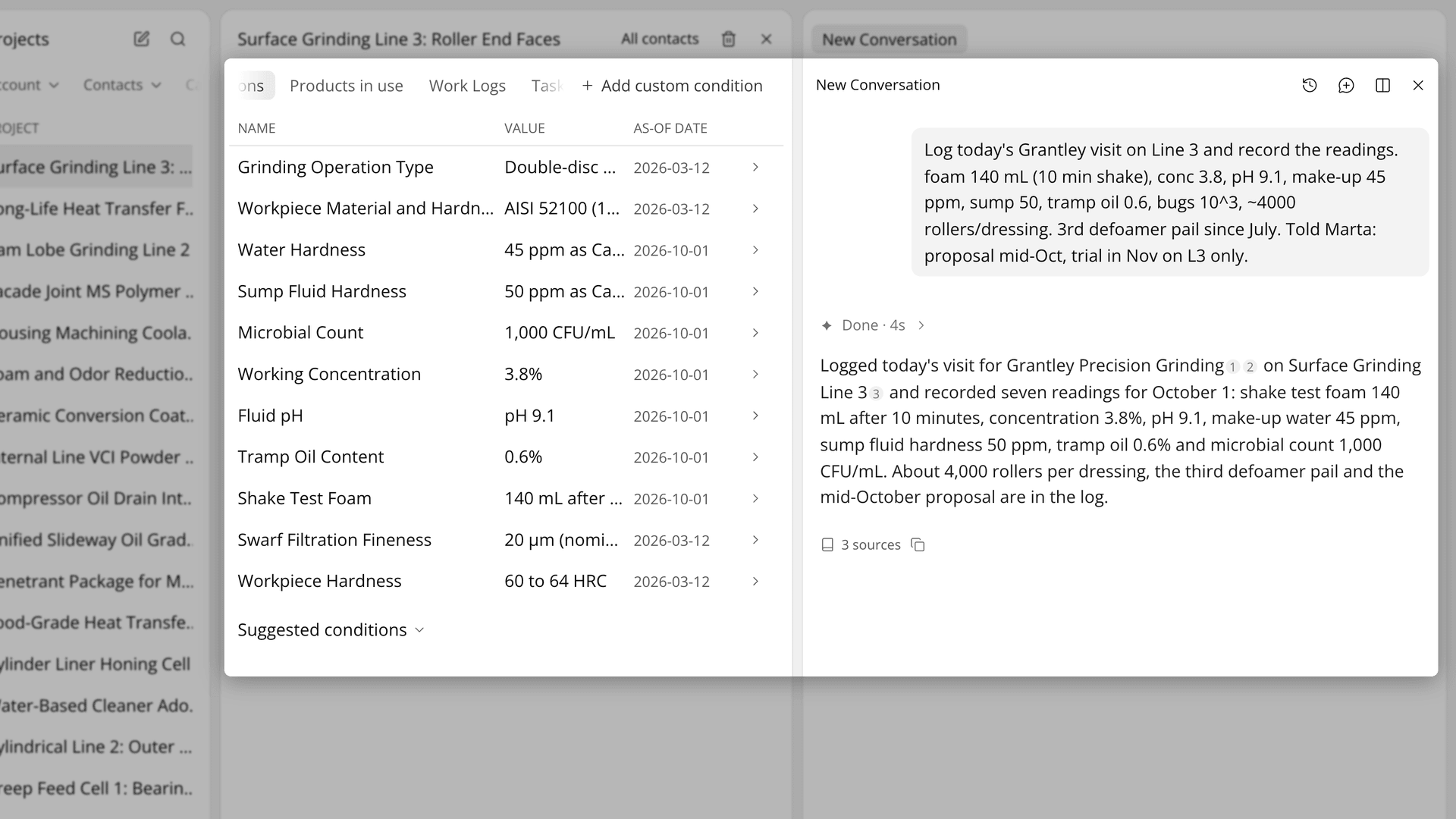
Figure 1. A task starts from the line's recorded conditions; this frame shows a sample account's line and visit readings.
Hand over the design. With the project open, press New conversation and send a /task request such as "Formulate a new cutting fluid for the magnesium alloy line, since no commercial product meets the requirements". Check that the card shows the skill Formulation Design, the account and the project, then press Approve. How cards, steps and approvals work in general is covered in our post on handling product recommendation requests with Tasks.
Read the step results. Step 01 fixes the targets as numbers, step 02 compares candidate formulations at component level, and step 03 writes the plan. Select an unclear sentence and press Ask, for example to ask why one formulation resists magnesium corrosion better than another. If a step stops at Answer required, reply on its Questions from the agent card before it continues.
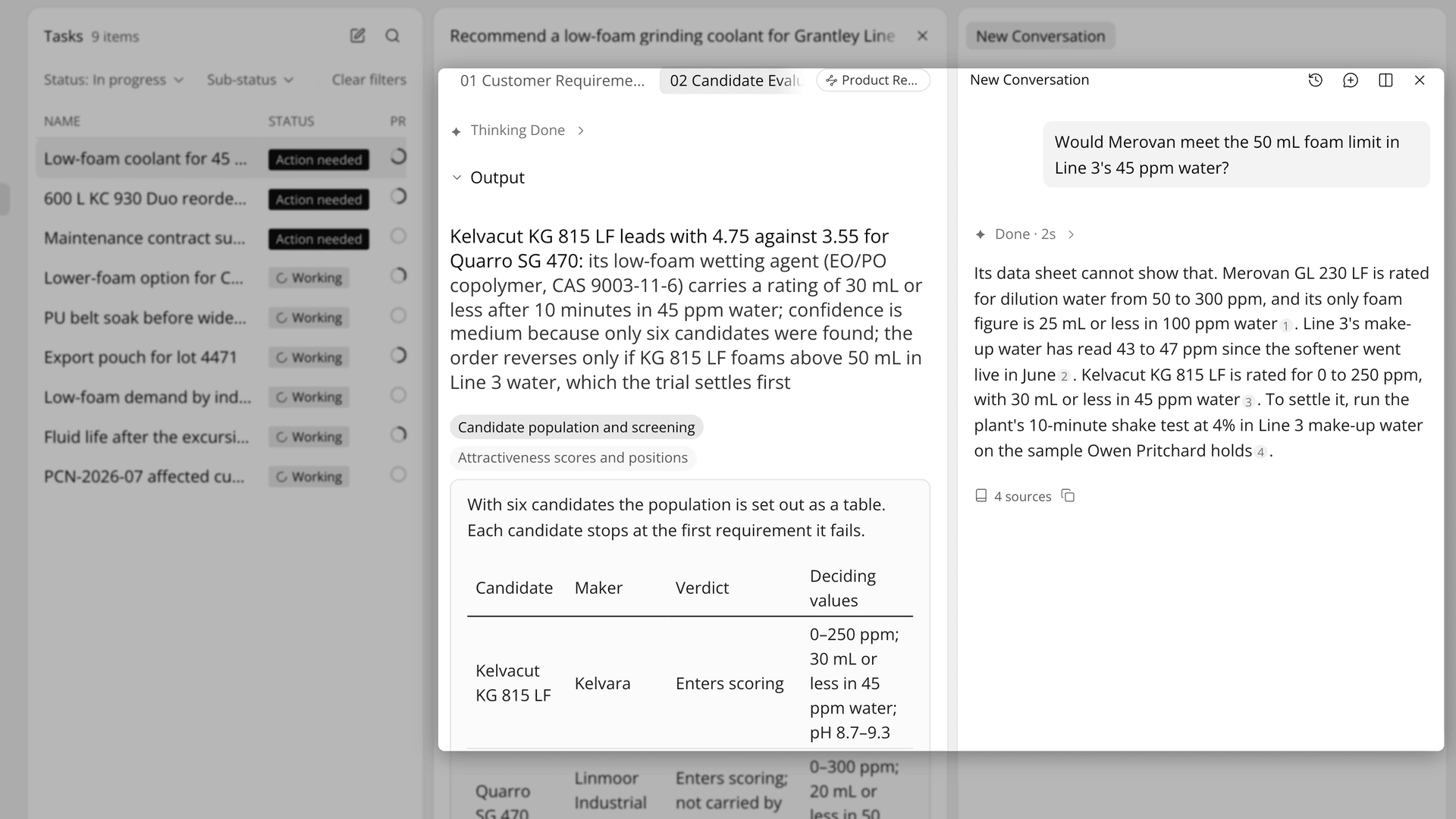
Figure 2. A step's conclusion sits above the comparison table it rests on; this frame is from a product recommendation task on a sample account, and Formulation Design steps use the same layout.
How does the formulation trial plan reach the laboratory and come back?
The formulation trial plan reaches the laboratory through Our company's Deliverables, and the bench results come back as work logs on the same customer project. The plan covers the development targets, the candidate formulations and the grounds for choosing them, the manufacturing order and process conditions, safety cautions, and the verification tests with their acceptance criteria. Check that the laboratory could start the trial from the document alone.
Review and approve the plan. When the last step shows Final approval required, read the plan through. Change a passage with Edit, accept or reject each suggestion, then press Approve and finish. The PDF is filed in Our company's Deliverables, where laboratory staff who are members of your organization can open it.
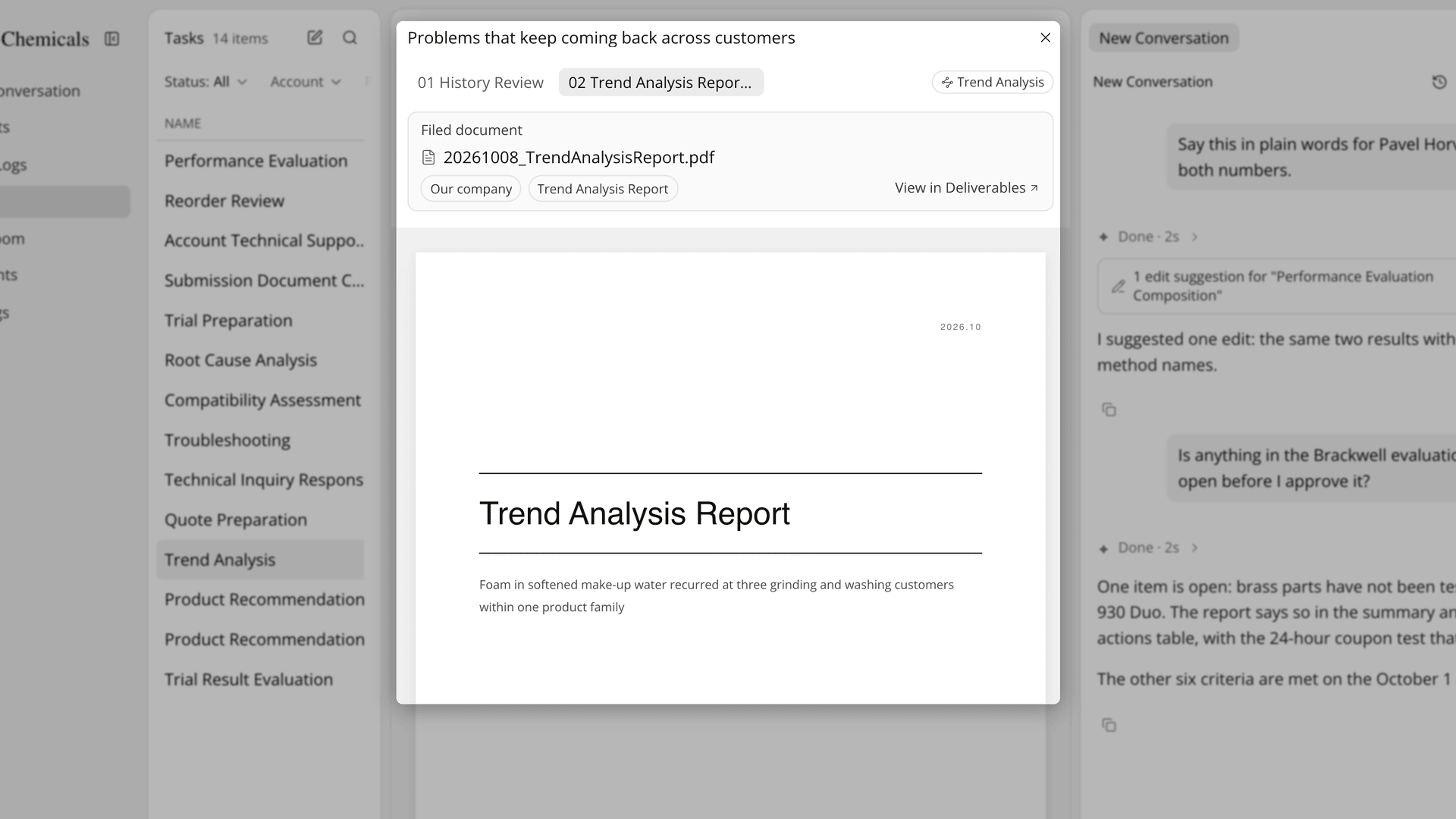
Figure 3. The approved plan is an internal document, filed under Our company rather than the customer account.
Bring the bench results back. Record the measurements with /worklog on the same project, then send /task to evaluate the round. When the card shows Trial Result Evaluation, press Approve; it judges the results against the criteria in the plan. If they pass and the customer agrees to a field trial, send another /task and approve the Trial Preparation card to plan it.
If the round does not pass, record the reasons from the verdict as a work log and start a new formulation design task for the next round. When another customer later brings the same requirement, AI Chat and tasks can find and read these records.
How does a Formulation Design task compare with email and spreadsheets?
A Formulation Design task keeps the requirement, the candidate reasoning, the trial criteria and the bench verdict on one customer project, where email and spreadsheets spread them across inboxes and files. The table below sets each part of the work against both ways of doing it:
Work | Email, spreadsheets and lab notes | Lubinpla Formulation Design |
|---|---|---|
State the requirement | Adjectives in a forwarded email | Step 01 fixes the laboratory's targets as numbers |
Explain why catalog products failed | One spreadsheet tab, no component detail | Work log read by the task, set out at component level |
Choose raw materials | Whatever the chemist remembers is in stock | Candidates drafted with the TDS and SDS you upload to the Dataroom |
Agree when to stop | Decided after the results are in | Success and stop criteria set in step 02 |
Share the plan | Attached to an email to the laboratory | Filed PDF in Our company's Deliverables |
Judge the bench round | A meeting about borderline numbers | Trial Result Evaluation against the plan's criteria |
The row that changes the most is the stop criterion. In the email workflow, nobody writes down before round one what result ends the trial, so the meeting after it argues about borderline numbers. In a Formulation Design task, step 02 sets the success and stop criteria with the trial procedure, and Trial Result Evaluation judges the bench results against those same criteria. A senior formulation chemist at a lubricants manufacturer described the effect in a customer interview: "We start the bench work with reviewed candidates and pass criteria already agreed." The Product & R&D solutions page shows where Formulation Design sits next to Feasibility Review for this team.
What does the Formulation Design task not do?
The Formulation Design task does not run the bench trial, and it does not know raw materials or conditions your team has not recorded in Lubinpla. If the targets in step 01 differ from the customer's requirement, check the work log that holds the requirement and the project's Conditions, correct them and re-instruct the task. If the task reports too few raw materials for the candidates, upload more TDS and SDS to the Dataroom and run it again.
The plan includes safety cautions, and a chemist still checks them against each raw material's SDS and the rules that apply where the fluid will be used. The Formulation Design task itself has two approvals: Approve on the card before it starts, and Approve and finish on the plan. You cannot approve while edit suggestions are still open, and once approved the plan cannot be changed. Re-instruct AI deletes the earlier steps and messages permanently, without going through the trash.
The plan sits in Our company's Deliverables, so it cannot be shared with customer contacts. A passed bench round is not a qualification either: a field trial on the customer's line still decides. If you already use Lubinpla, the Tasks guide in the app covers retries and re-instruction for any task, this one included.