What Is Lubinpla? AI Agents for Specialty Chemical Technical Work
Lubinpla is an AI agent platform for technical work in specialty chemicals: it reads a team's own records, reasons through conditions and mechanism, and delivers one approved document per case. Sales and technical teams at chemical manufacturers and distributors use it to select products, troubleshoot problems and answer inquiries; by default a person approves each document before it is filed.
In under two minutes, the introduction follows one customer problem in Lubinpla, from a logged site visit to an approved proposal the customer opens in their own Field Care portal.
In specialty chemicals the right product or fix depends on the customer's operating conditions, materials and site history, so the same symptom at two plants can call for two different answers.
Domain AI tools still make mistakes: a preregistered Stanford study found that AI legal research tools retrieving from their vendors' own legal databases each hallucinated between 17% and 33% of the time (Magesh et al., 2025).
Lubinpla works each technical case from the customer's records and the team's data sheets and test reports, and sets out conditions, candidates and evidence before it reaches a conclusion.
Every Lubinpla case ends in one document written for that customer and that case, such as a Product Proposal or a Problem Resolution Report, filed as a PDF after a person approves it by default.
In Lubinpla's internal benchmark on the same product recommendation cases and documents, hands-on time per case was under an hour, against about 4.6 hours with a general AI agent (Lubinpla Tasks page, 2026).
Who uses Lubinpla, and for what kind of technical work?
Lubinpla is used by the people who answer a customer's technical questions at specialty chemical manufacturers and distributors: technical sales reps, application engineers, technical support staff, quality and regulatory specialists, and the team leads above them. The chemistries it covers are materials protection, lubricants and metalworking fluids, adhesives and sealants, process and utility chemicals, and cleaning.
The work comes as tasks. Each one is a fixed procedure for one kind of case and ends in a named document. Lubinpla comes with 21 built-in tasks, sorted here by who usually asks for them:
Technical sales: Product Recommendation, Quote Preparation, Reorder Review and Account Technical Support Summary, ending in documents such as a Product Proposal or a Quotation.
Application engineers: Trial Preparation, Trial Result Evaluation, Formulation Design, Performance Evaluation and Site Inspection.
Technical support: Technical Inquiry Response, Compatibility Assessment, Troubleshooting, Root Cause Analysis, Similar Case Analysis and Escalation Decision.
Quality and regulatory: Submission Document Check and Impact Scoping, which catch missing or expired documents and trace who a batch, supplier or regulation change affects.
Team leads: Trend Analysis, Technical Support Performance Analysis and Feasibility Review, plus Document Writing for anyone who needs a settled conversation written up.
A manufacturer uses Lubinpla to give every customer site the reasoning its best engineer would apply. A distributor uses it to weigh products from several manufacturers against one customer's conditions.
How is Lubinpla different from other AI options for chemical teams?
Lubinpla differs from other AI options in where it starts and where it ends: it starts from the company's own records and ends in a reviewed document for one customer. Each alternative below is useful, and many teams already run one or two of them. The table sets out what each does well and where it falls short on this particular work:
Option | What it does well | Where it falls short on technical cases | Lubinpla |
|---|---|---|---|
General AI assistant | Ready in seconds, broad general knowledge | Answers from public knowledge unless you paste in your TDS and site notes each time | Reads your data sheets, accounts and work logs |
General agent platform or in-house build | Connects to any folder or spreadsheet, fits any industry | Your team writes and maintains the domain logic | Comes with 21 tasks that have the technical procedure built in |
Enterprise AI built with a large IT provider | Security review, single sign-on, reach across company mail and files | Tuned for general office work; a specialist procedure has to be designed in-house | Built only for specialty chemical technical work |
Chemical R&D or formulation AI | Lab work such as predicting formulations | Starts at the bench, not at a customer's site | Starts from the customer's conditions and ends in their document |
Sales and CRM AI | Email, pipeline and follow-up automation | Tracks the deal, not the technical judgment | Compares products on conditions and evidence |
The enterprise row is the one teams ask about most. An assistant rolled out across the company is secure and convenient, and it finds and summarizes documents well. It does not follow a fixed procedure for a technical case, and it does not keep the reasons a candidate was dropped unless someone builds that. In Lubinpla, the steps of each task are that procedure, and the reasons stay in the record. An in-house build can reach the same place, but someone has to keep its prompts, connections and files in order after the person who built it moves on.
Why does specialty chemical technical work need its own kind of AI?
Specialty chemical technical work needs its own kind of AI because the answer is decided by conditions, not by general knowledge. A coolant that runs well on one machining line can foam on another with softer water. A corrosion inhibitor that suits one cooling tower may fail in a second with a different metallurgy. The facts that settle the question sit in the customer's site records, the current data sheet revision and the notes from the last visit.
A fluent answer is not enough either. Technical work ends with someone who has to act: a plant manager approving a corrective action, a buyer accepting a proposal, a quality lead releasing a document package. That person needs to see which conditions the answer depends on, which candidates were ruled out and why, and what is still unknown.
The third reason is memory. In many technical teams the reasoning behind past decisions lives in email threads and in the heads of a few senior engineers. When one of them moves on, the next rep inherits the files but not the judgment.
Lubinpla was built around those three points. Its agents reason in explicit steps from a company's own evidence, keep confirmed facts, inferences and unknowns apart, and write the result down so the reasoning stays with the account.
How does Lubinpla work through a customer case?
Lubinpla works through a customer case in four moves: evidence, request, reasoning in steps, and one document.
First, the team brings in what it already has. TDS, SDS, CoA, certificates and test reports go into the Dataroom, where Lubinpla suggests their tags on upload. Accounts, Projects and Work Logs hold each customer's sites, conditions, products, visits and past fixes.
Second, someone describes the case in plain words, such as a sample account's ice rink asking which heat transfer fluid to run in its secondary loop. The agent reads the site's records, proposes the task that fits, and starts when a person approves.
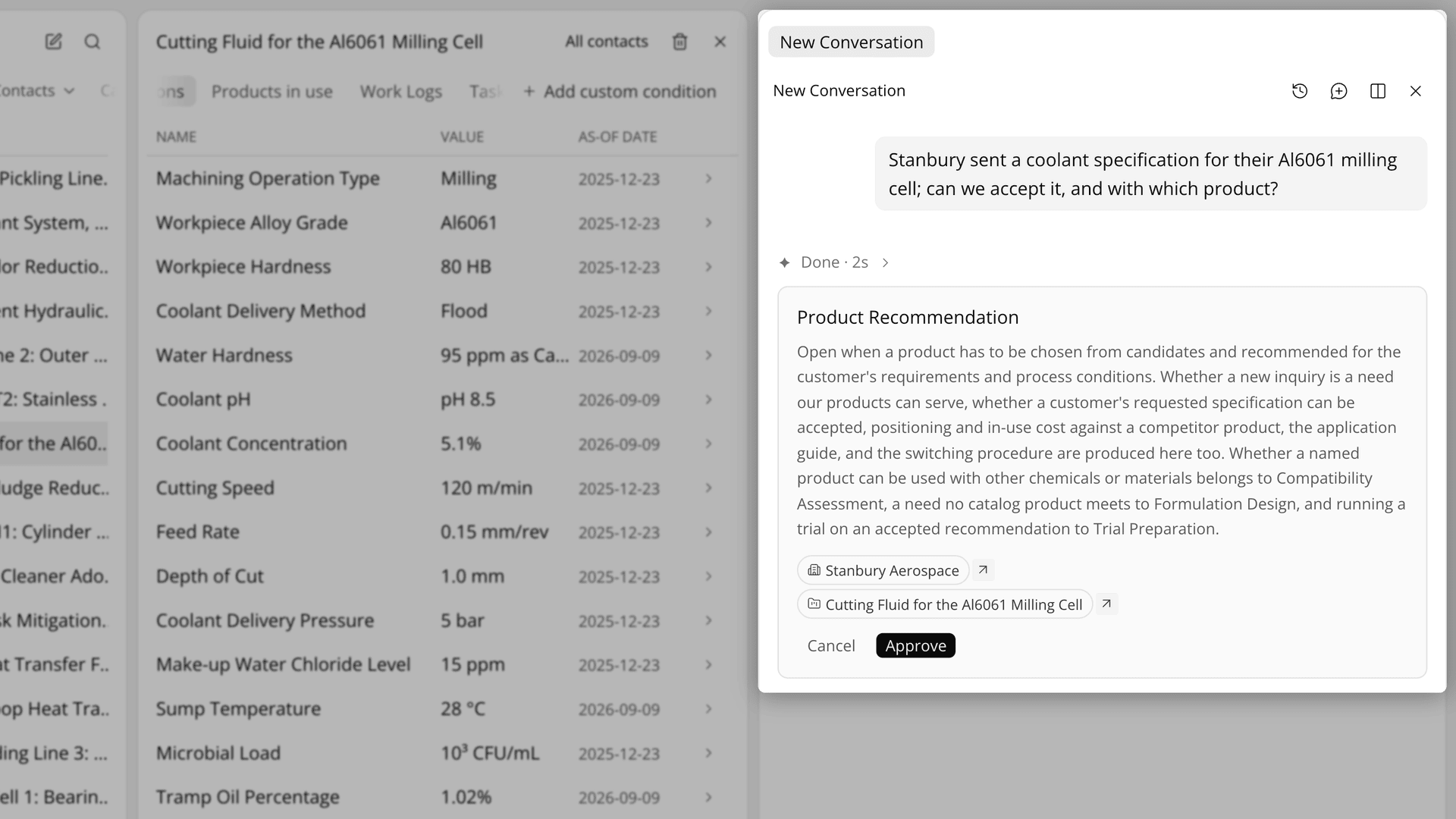
Figure 1. By default, a case starts only after a person approves the proposed task and the customer account it applies to.
Third, the task runs one step at a time. It states the customer's requirement and baseline conditions, identifies the factors that matter, weighs candidates against the evidence and reaches a conclusion. Each step shows the records it read. In a product recommendation, a candidate drops out only where a recorded value fails a limit, and the check it failed stays in the step; a candidate whose status is unconfirmed is held, not dropped.
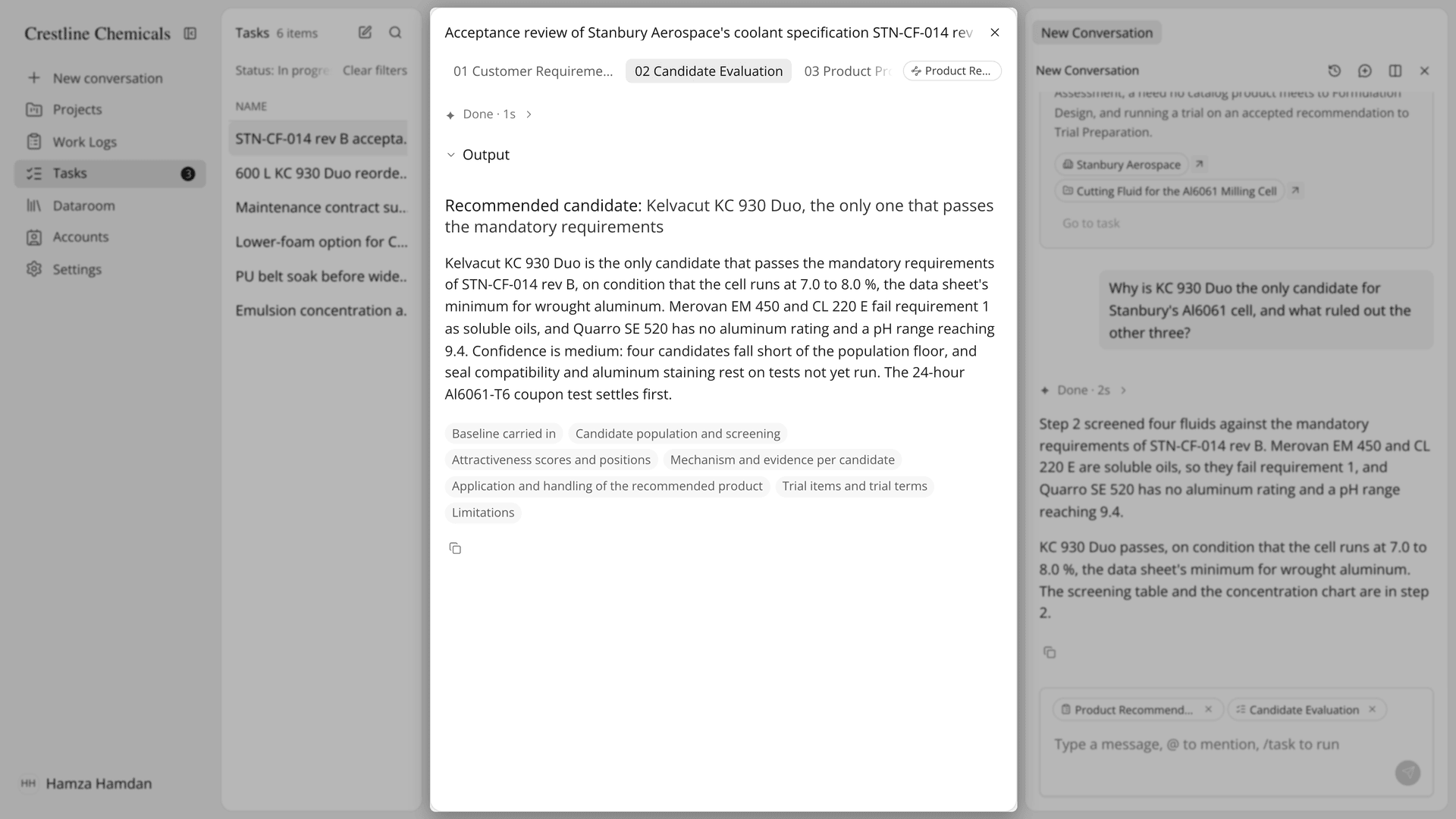
Figure 2. Each finished step keeps the comparison its conclusion rests on.
Fourth, the task writes one document for that customer. After approval it is filed as a PDF with the account, and the team can share it with the customer through Field Care when it chooses.
What principles guide how Lubinpla's agents work?
Lubinpla's agents follow a few working principles, and each one maps to something the product does.
Evidence before opinion. A recommendation is only as good as the data sheet, test result or site record behind it. In each step, the conclusion and the figures it rests on carry numbered sources, and inside the app each source comes with a one-line reason for using it.
Confirmed, inferred and unknown stay apart. A step marks what the records confirm, what it infers from them and what is still open, so the reader knows what needs checking before the answer goes to a customer.
People decide. A model on its own answers fluently but unevenly, and the Stanford study above shows that even tools grounded in a vendor's own database still produce errors. Lubinpla therefore treats approval as part of the work: by default, a person approves a task before it starts and approves the final document, and an organization can add approval to any step in between.
Experts set the method. A team writes its rules into a task once, such as which documents go with every proposal, and the agents apply them every time, whoever asks. On higher-tier plans, an organization can also build tasks of its own.
Your data stays yours. Customer documents and records are used only to do the team's work. They are never used to train AI models, and each organization's data is kept separate.
What does Lubinpla not do?
Lubinpla knows a customer's site only from the records your team keeps in it. If the current SDS revision was never uploaded, or a site visit was never logged, the reasoning cannot use it, and the document is only as current as those records. The agent can also search public sources for data sheets and literature, and it marks those as web sources so a reader can tell them apart from the team's own records.
Lubinpla does not decide prices or lead times. A quotation takes them from the price lists and terms your team has confirmed, and each one stays tied to its source.
A Lubinpla recommendation is not a qualification. Lab checks and a field trial still decide whether a product works on the customer's line, which is why Trial Preparation agrees pass and stop criteria before a trial starts.
Lubinpla does not send anything to a customer on its own. Outgoing email waits for approval by default, and nothing is shared through Field Care until someone on the team shares it, item by item.
Lubinpla also does not replace the systems a team already runs. It works next to email, shared drives and CRM, and each person can connect their own Gmail and Google Calendar when they want the agent to work from their mail.
For one task in full, read how a team can handle customer product recommendation requests with Tasks. The Tasks page shows the tasks and the documents they end in, and Security covers how customer data is handled.